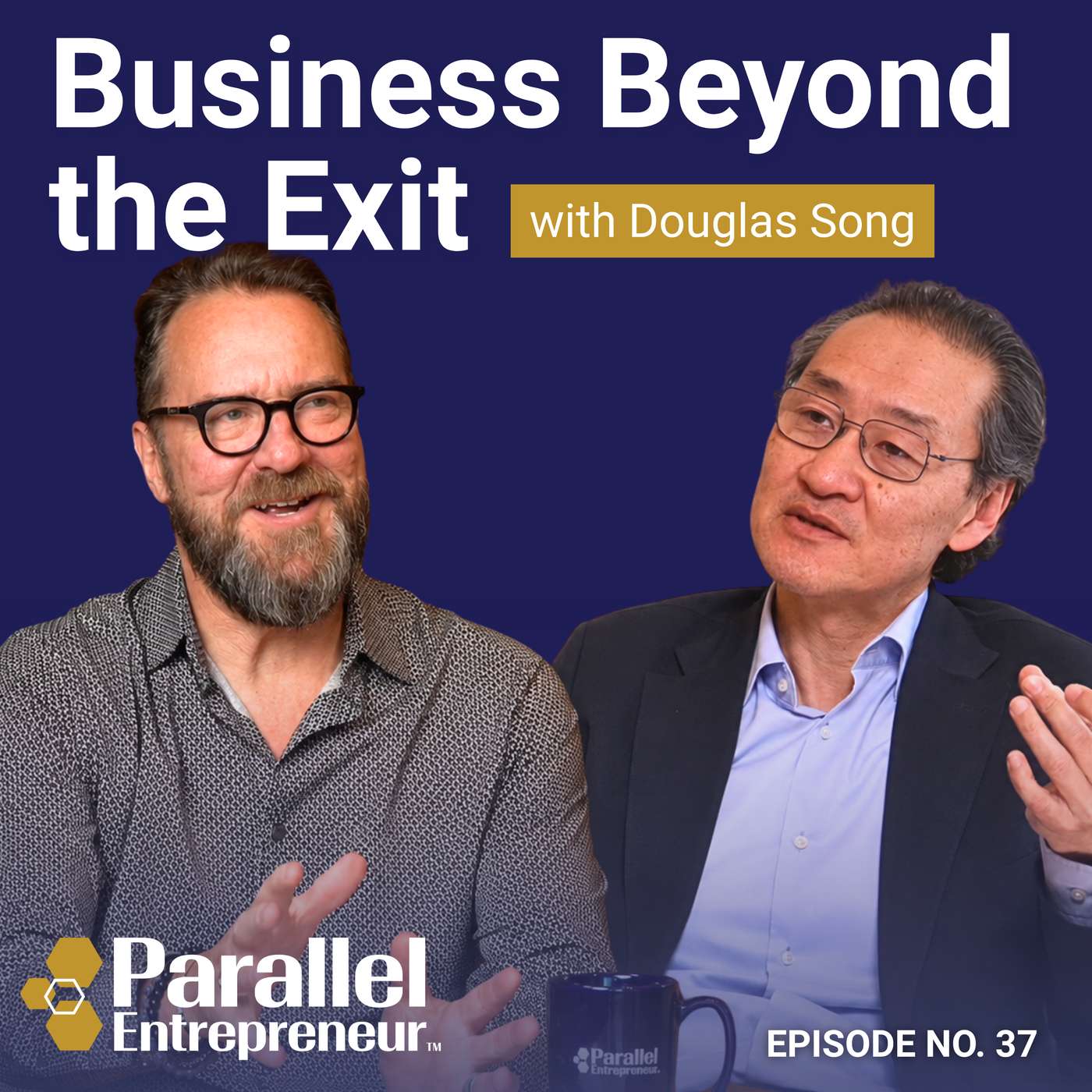
Episode 37 · Douglas Song

Why Great Businesses Need Stewardship, Not Just Capital | Douglas Song

Parallel Entrepreneur with Mark Cleveland · Episode 37

0:00 / 1:21:30
Why Great Businesses Need Stewardship, Not Just Capital | Douglas Song
0:00 / 1:21:30

Episode notes

What happens when an entrepreneur spends decades helping founders transition, scale, and protect the businesses they’ve built?

In this episode of The Parallel Entrepreneur, Mark Cleveland sits down with Douglas Song, founder and CEO of Prodos Capital, for a wide-ranging conversation on independent sponsors, lower middle market acquisitions, leadership, succession planning, AI, uncertainty, and what founders often overlook when preparing for growth or exit.

Doug shares lessons from dozens of transactions across multiple industries, including how he evaluates leadership teams, why organic growth still matters more than acquisition rollups, and what makes a business resilient in a world filled with constant disruption.

But this conversation also becomes deeply personal.

Doug reflects on immigrating to the United States from South Korea as a child, watching his parents build a life through entrepreneurship, and how that experience shaped the way he thinks about people, stewardship, and long-term value creation.

The conversation also explores:

• The rise of the independent sponsor model
• Why succession planning is becoming urgent for founder-led businesses
• AI adoption in lower middle market companies
• How great operators handle black swan events
• Why culture and people matter more than spreadsheets
• Building blue-collar entrepreneurship pathways for the next generation
• The difference between growing fast and growing well
• Legacy, learning, and designing a life with intention

Whether you’re building, scaling, buying, selling, or simply trying to lead well through uncertainty, this episode offers a rare combination of strategic insight and lived experience.

Subscribe for more conversations with founders, operators, creators, and visionaries building in parallel.

About the Host
Mark Cleveland is an entrepreneur, investor, and advisor who works at the intersection of multiple ventures. As the voice behind The Parallel Entrepreneur, he explores how founders build aligned businesses, strong teams, and sustainable momentum—without forcing themselves into a single path.
Follow Mark on LinkedIn

About the Guest
Douglas Song is the Founder and CEO of Protos Capital, an independent sponsor firm focused on lower middle market businesses. For more than 25 years, he has worked alongside founders and management teams to help businesses grow, transition, and navigate acquisitions with a people-first approach centered on long-term value, stewardship, and community.
Follow Douglas on LinkedIn

Links & Resources
👉 Join the Parallel Entrepreneur Network:
parallelentrepreneur.com

👉 Subscribe for more conversations with leaders building aligned systems across business, education, and community.

👍 If this episode resonated, leave a comment or share it with someone shaping the future of leadership.

Key Moments
00:00 Why founders need transition plans, not just exits
00:47 Introducing Douglas Song and Protos Capital
01:30 Entrepreneurship Through Acquisition (ETA) explained
03:00 Independent sponsors vs. traditional operators
05:00 Why operators matter more than dealmakers
06:01 The coming succession wave for founder-led businesses
08:15 What “another bite at the apple” really means
11:50 How Protos measures investment success
12:40 Defining the lower middle market
13:50 AI adoption in family-owned businesses
16:30 Using AI during due diligence
17:20 What founders overlook before a transaction
20:00 Growth by acquisition vs. organic growth
23:40 Why organic growth still wins with buyers
24:38 Evaluating leadership teams under pressure
27:40 Black swan events and constant uncertainty
31:35 Managing leverage and protecting downside risk
35:22 Is Douglas Song a parallel entrepreneur?
37:20 Lessons learned across multiple portfolio companies
41:15 Why flexibility matters more than fixed timelines
44:20 Different types of capital partners
46:35 What makes founders great partners
49:27 Mentoring the next generation of independent sponsors
52:25 Why community matters in business
53:48 Protecting culture after acquisition
55:08 Doug’s immigrant family story and entrepreneurial roots
57:20 Building blue-collar entrepreneurship pathways
01:01:45 AI, uncertainty, and creating opportunities for young people
01:06:05 Books, learning, and the concept of flow
01:10:12 Writing letters to his children
01:11:40 Advice for navigating uncertainty
01:13:40 Restoration, creativity, and balance
01:15:45 Formula 1, Monaco, and memorable experiences
01:17:18 Doug’s long-term life plan and legacy goals
01:20:14 Final reflections and closing thoughts


#ParallelEntrepreneur #DouglasSong #PrivateEquity #Entrepreneurship #MergersAndAcquisitions #Leadership #BusinessGrowth #IndependentSponsor #AI #FounderJourney

Chapters

  1. Why founders need transition plans, not just exits
  2. Introducing Douglas Song and Protos Capital
  3. Entrepreneurship Through Acquisition (ETA) explained
  4. Independent sponsors vs. traditional operators
  5. Why operators matter more than dealmakers
  6. The coming succession wave for founder-led businesses
  7. What “another bite at the apple” really means
  8. How Protos measures investment success
  9. Defining the lower middle market
  10. AI adoption in family-owned businesses
  11. Using AI during due diligence
  12. What founders overlook before a transaction
  13. Growth by acquisition vs. organic growth
  14. Why organic growth still wins with buyers
  15. Evaluating leadership teams under pressure
  16. Black swan events and constant uncertainty
  17. Managing leverage and protecting downside risk
  18. Is Douglas Song a parallel entrepreneur?
  19. Lessons learned across multiple portfolio companies
  20. Why flexibility matters more than fixed timelines
  21. Different types of capital partners
  22. What makes founders great partners
  23. Mentoring the next generation of independent sponsors
  24. Why community matters in business
  25. Protecting culture after acquisition
  26. Doug’s immigrant family story and entrepreneurial roots
  27. Building blue-collar entrepreneurship pathways
  28. AI, uncertainty, and creating opportunities for young people
  29. Books, learning, and the concept of flow
  30. Writing letters to his children
  31. Advice for navigating uncertainty
  32. Restoration, creativity, and balance
  33. Formula 1, Monaco, and memorable experiences
  34. Doug’s long-term life plan and legacy goals
  35. Final reflections and closing thoughts

Full transcript

situations where it's a business owner that is looking to exit, that's looking to create some liquidity for its state planning or other whatever other reasons, but wants to stay on board for a transitional period of time defined by years, not months. Welcome to the parallel entrepreneur, where we explore how founders, creators, and visionaries bring multiple ventures and parts of themselves to life. In season 2, we're keeping the conversations real and wide-ranging about alignment, creativity, and the messy, beautiful art of building in parallel. It's not about doing more. It's about letting our ideas work together. This is the parallel entrepreneur.

Welcome to the parallel entrepreneur. My guest today is Douglas Song. He's the uh CEO, founder, and driving force behind Protos Capital. and we're going to enjoy an exploration about capital formation, mergers and acquisitions. Um, and his just vast experience in a space that not, you know, not enough entrepreneurs are fully aware of. Uh, including myself, Doug, I have I was needing a lot of, uh, learning and and growth and education in the area around this topic of independent sponsor. So, um, with that, let's just I'm I'm curious. You just landed, right? So, what does a calendar what does your calendar look like and what have you been up to?

I was um in New York City last night. Um I was a guest lecturer for um an ETA class. It's an MBA level class. ETA stands for entrepreneurship through acquisition. I think this became popular at Harvard, then it caught on at Stanford and now other colleges. And basically what it's teaching, it's a class about how to become an entrepreneur through acquisition. So you're they're teaching you how to make an acquisition and then these individuals are dropping in typically to run these businesses. So it's it's it's a very interesting program. So I went uh last night to talk about the independent sponsor model which is differentiated from the ETA and and the the differences

and how we look at deals etc. So, it was a very very interesting class. I'm I'm excited to hear more about that because I am sort of your classic bootstrap entrepreneur and then I went out and raised capital and have done some capital transactions that involved investors. Ultimately, I've sold six companies and started the same. And in the process, I never heard anything about an independent sponsor. And I I think most of my training was you you go out, you find a problem, you solve it, you bring a customer to bear, you get financed by your customers, you grow, and you're bootstrapping in this thing.

And this ETA approach is different. 3 minutesYeah, absolutely. Uh so you could do ETA two ways. First way is you bootstrap as you said. So you're going to use your own money and try to find an acquisition. Typically, these are smaller companies, so you're going to finance it with SBA loans or you could find a sponsor, somebody to back you and do a search. So, that's commonly called a search fund, uh, I think as well. And, uh, so there there are two ways to do it, but in both cases, you're dropping in as the CEO of these businesses. That is very different than the independent sponsor model. Most independent sponsors are not seeking to drop in as a CEO. We are sponsors much like a private equity firm. So we are here to uh uh manage the business,

manage the investment from a board level on down. We're not there to run the day-to-day. The ETA model is very different because they are going to uh be the boots on the ground. How often are these experienced entrepre entrepreneurs in your experience or are they um coming out of business school or coming out of a finance program or coming out of some private equity firm and they've seen it done a number of times and now they want to go learn how to be the CEO specifically? What what is the character of the person that's going through this learning process?

I think the person first of all has to be highly entrepreneurial. They wanna they have to be entrepreneurial by by nature. I think that's the first definition. I I think the second thing is they're coming from various backgrounds. I've seen folks that have an engineering background, a consulting background. I've I've seen um people that have family businesses that they've been involved in and now they want to do something like this. So it it's really and I've seen private equity professionals etc. So I've seen a very diverse array of professionals that want to do this.

So if you were teaching that class today and parallel entrepreneurs were listening, what would be some of the pointers you would want them to come away with? Well, I sort of made this comment last night. I I said, you know, if you're going to run the company, the most important thing for you to understand and learn and have experience is being an operator.

How do you manage a business? And we're talking about smaller companies. So there's a lot to do. So how do you manage a business? How do you put in the systems? How do you create the infrastructure? How do you then grow and scale the business? Right? These are things that you need to figure out. And so to me, most of that is operational.

It's not deal making. It's not capital raising. That's operational. So my advice to them was make sure you have that background because I think the negative sort of vibe of the ETA world is that a lot of these professionals don't have that operating background. So can they re truly be successful and that that that's really that's the issue. So that's where I that's where I sort of focus my comments.

ure. And we're usually talking these days about baby boomer u founders that have a going concern that has a lot of value. Um maybe there's no transition or succession plan in place for a second generation, which is a difficult thing to manage. Um maybe there there just is no interest in a family extension of this business. So their their succession plan involves how do I bring in the right leader? I might not have that person on staff. How often is this conversation um like what is the interview like with the CEO, the prospective CEO in waiting with a backing and the seller entrepreneur who's trying to figure out is this a part of my succession plan as well as my exit plan?

Yeah, I think that's a common conversation. I I I don't think that's just for ETA. I think that's for independent sponsors, that's for private equity. Um, I think it's the same conversation, which is, um, and this is why I'm so excited about what I do, because it's my fundamental belief that there's some real macro trends. One of those macro trends is baby boomers are starting to age out. They're getting older. And my, this is my own research.

My own research is that there are some somewhere between 3 to 5 million private businesses in this country with more than one employee. Many of those businesses are owned by baby boomers and I would say the majority of those companies don't have a succession plan, a clear succession plan. So there's going to be a great opportunity for whether you're an independent sponsor, private equity firm, ETA or or just an investor uh with that wave coming because they are starting to age out. So I think the conversation is uh you know you really need to address their wants, their goals for the business and for the people. Now they're going to be sellers or entrepreneurs or owners that they want to sell the

business at the highest possible price, fastest deal, and go off to the beach. Those are not the type of businesses we go after. What we focus on are situations and I'll come back to ETA in a moment. We come we we we we really gravitate towards or try to target situations where it's a business owner that is looking to exit that's looking to create some liquidity for it state planning or other whatever other reasons but wants to stay on board for a transitional period of time defined by years not months and potentially and hopefully have another bite at the apple. Right? So, they're really looking for a a good run run runway to transition and exit, but they're young enough or perhaps

energetic enough to stay involved and continue to run the business that they have built over decades, sometimes generations and love. And if they really care about the people, the culture, the heritage of the business, this is the these are the type of buyers, I'm sorry, these are the type of sellers that we go after because that's exactly what we do.

We're seeking those situations. You mentioned something. Another bite at the apple. And just in case somebody doesn't know what that means. Let's let's let's visit that for just a second. Another bite at the apple means that somebody is still they've rolled equity into this new structure the owner has, right? And there is an intention uh with new capital, new leadership, perhaps a new CEO. uh they might extend their their role into a board position, but they're an owner and they're they're they're looking for a second exit. Really? Yeah. Yeah.

Absolutely. Um and those are the situations we look for. So, I'll give you an example of a deal we're closing tomorrow. It's a business that's uh been around for over two decades. Um the owner has grown it very successfully over 20 years, scaled the business, but um it's time for the owner to slow down a little bit perhaps, but also take some money off the table, but believes that there is a tremendous amount of potential still left in the business. And so the deal we designed is we're acquiring 80% of the business and the owner is going to stay in for 20% and continue to be actively involved in the business. And when I say second buy of the apple, just to double click on that, what I'm talking about is, and this is what I

view as success, if the seller is taking money off the table today, let's just say $20 million, and they keep residual equity, and then together as partners, we build the business for another three, five, 10 years. And we'll talk about time frames a little bit later, uh, I'm sure, but we build the business. So, we're creating a more valuable business. And for me, success is if that business owner that is selling to us that took $20 million off the table can take as much at the other side on a lower valuation or on a lower equity holding.

That to me is success. That's what we look That's what we look to do and accomplish. They'll take 80% of a $20 million valuation off the table. They'll roll that 20% let's say into the into the new co and then that 20% five six years from now ought to be worth 20 million again. Right. So we call that's a second bite at the apple. I want a third bite at that apple. Right. Yeah. No 100%. That's the goal.

And obviously not only are we creating value but we utilize other things like leverage that supercharges the equity return for this business owner on that second buy of the apple. Are you looking for an internal rate of return that's specific? How do you measure that? We we always um uh go into a situation and you know we have various cases that we're looking at but I I would say the conservative base case without acquisitions.

We want to see um 25% irr over five years. You have to pick a you have you have to pick a destination, right? So five years is typical. So 25% and that translates into a three times your money deal. So so we're we're creating 25% IR in 5 years or three times your money. That has to be our minimum conservative base case. And from there we'll do other things to create more value from there.

Obviously we want to create more value than what I'm just describing, but that's our conservative base case. So we're also usually talking about lower middle market. Uh let's let's define that a little bit. what is a lower middle market from your perspective? Uh, and I we all have heard some very big transactions and some great big exit stories and everybody's excited for them and they're in the upper middle market. You know, what is what is attainable, reachable and what's the range of capital investments that you're looking to make in that in that space?

Yeah, I I would say everybody's definition is slightly different. Um, the way which is why I'm asking you, right? Yeah, absolutely. Uh the way I look at it is lower middle market is um valuations or enterprise values of up to 100 150 million in that ballpark. That to me is lower middle market. Okay. What once you get past that I think then then you're starting to approach the middle market.

And so if you back into the IBA what does that mean right? What what are the IBA levels? I think you're you're looking at something in sort of the you know two even lower a million of IBA to probably about 15 million maybe 20 million of you that that's how I define lower middle market and in the lower middle market we're seeing everybody talk about AI but not really have AI command and I'm not sure anybody does but in your experience looking at these companies do you AI adoption in like an excellent example of that. You see some poor examples of that. Does that add or detract to your perspective on valuation? How do you

look at AI as a tool um for getting at some of that value that you want to create over the next three to five years? I think AI is incredibly uh disruptive in good and bad in good and bad ways. Um, and nobody knows what it's going to look like. I think that's my first comment. I would say before I I I even get into AI, most of these lower middle market companies are going to be familyowned and run typically for decades, sometimes generations. And most cases, they're still run like a familyrun business. Um, so before we even talk about AI, we have to talk about do they have a budgeting process?

some of the blocks and basic blocking tackling. Do they have good financial reporting? Do they have IT systems, ERP systems, cyber security, cyber security, all of these things before we even get to AI? What I've seen with AI, to answer your question, um I would say most of the companies in the lower metal market are not really utilizing AI. They don't understand it. And this is not a negative statement.

I'm just saying they they have not really ventured into AI as of yet. Uh I would say the small minority are are playing with AI right now, but nobody has fully utilized AI. I haven't seen a full kind of model uh being run at at any of these companies so far, but I think everybody's aware of it. They're trying to figure it out. And you know we are trying to incorporate AI into our own portfolio companies.

I'll give you some examples. We used AI to market to to do uh things on the marketing side. Uh so we had uh people program a way to use AI to do outreach, email, and even telephone calls. So that's something we've we've uh toyed with. Um, we're using AI now um to analyze a lot of data and then take that data take that data and create spreadsheets from it and graphs and then create whole PowerPoints.

Are you using AI in your due diligence process and how is that? Yeah, absolutely. We're starting to and and what we're doing is you can take so when it's a bank process meaning there's a bank or a broker involved typically they're producing what's called investment memo or investment presentation and also they have financials. So now what you could do is you could feed all of that information into these models and they'll spit out an executive summary describing the business, some of the pros and cons of it, some of the risks, some of the upsides, and just give you sort of a holistic look at the deal. I I think you have to automate it and you have to customize it. But that

is saving us enormous amounts of time um just as an executive summary. And then once we pass that limus litmus test then we can dig deeper from there. I find in my own M&A practice that uh writing the SIM the confidential information information memorandum which will have a lot of the things you just referenced uh writing that document with the entrepreneur and consolidating everybody's uh perspective on the business into a concise oh happens to be 60 pages you know or 45 pages long but as concise as you can get it is a very helpful uh internal discipline it'd be like man I wish I had done this before when I wasn't trying to sell. How would this have clarified my operations and my

view to it? And I'm I'm curious. Uh we're talking about risks. What are some of the the risks that you find that founders overlook? Um and and what what could that could impact valuation or deal structures? Uh I'm not sure if it's risks, but it's certainly things that they need to consider. Um I would say the first thing is financials. um they have to have good financial reporting and controls. Every buyer coming in, they're going to want to see your financials. So, if your financials are a mess, um they're not accurate, they're not timely, they're not organized, all of those are red flags. and it's just going to take longer for whether whether it's the buyer, the accounting firm or or or the

uh bankers um to get through due diligence, right? And prepare what they need to prepare on their end. So, I would say that's number one. I would say number two is have good IT and other type of systems in place because that really does produce the right amount of data and KPIs and other things. uh and it shows that your your your company is wellrun typically I would say the third thing is have a real management infrastructure and this is very very rare I've rarely see this but have a management succession plan in place and people identified or at least a process that is very rare uh in the lower middle market

I rarely see that uh I would say also if you have, especially if you're seeking to sell, if you have something that's very thoughtful in terms of how you see the competitive landscape and then how do you want to grow, how you see growing the business and as a buyer, you never want to see just one path to growth. You want to see multiple ways to win.

That's good. That's a good piece of feedback, right? So if you have a a thoughtful kind of piece on this uh that is very valuable because that's what people want to see and that's what people will pay for. 20 minutesWhen you are looking at these growth strategies and you see a company that's never acquired another company and it says we're going to grow by acquisition. Um that may be their signal. That may be them really saying hey we're ready to be a platform. We want to grow by an acquisition. we need a partner and a capital planner and somebody like Protos Capital uh at the table with us to execute this or is that somebody saying, you know, I'm suppose the details in the

details, but or is that somebody saying, "Hey, uh we're just throwing that up spaghetti on the wall." What What's your experience been? I would say in most cases, um we don't see a lot of M&A activity historically in these lower middle market companies. Um and I think the reason is very simple. Uh most of these companies have been around for multiple decades, sometimes generations, and they're successful.

21 minutesThey're quite successful and growing organically and growing organically. And why break that? Why break that by doing an acquisition and potentially disrupting that? Why why break that? So I would say the vast majority of the cases we don't see a lot of M&A activity. Now everybody everybody says in their information memorandums I'm sure you've seen the same thing that one of the upsides is M&A activ M&A um growth. Yeah, we're ready. We're ready.

We're ready now to do it. We just need the capital, the right financial partner, etc. Everybody says the same thing. The other thing I see quite often is diversification. Um, but going back to M&A, I would say, uh, it's easier said than done. Um, you can't just do an M&A strategy for the sake of it. It has to make sense. I would say the first thing we look for is we look for fragmented industries. So, you want to make sure that there are targets and it make you know that there is a consolidation play.

We do look for situations like that. So, that that's for sure. I would say the second thing is you want to make sure that the current management team can handle an acquisition because there's a tremendous amount of work that goes into an acquisition not only the due diligence part of it but postclo the integration and making it work. So you want to make sure you have the proper team and infrastructure to do that. Now, of course, we're going to do quite a bit of the work and lead it, but you still need the right operating team to integrate and do all the things that need to be done. Otherwise, it's going to fail, and we've seen that happen. So, you want to make sure the team is right

that they because most times they don't have that experience. So, what do you do? Do you bring in people that have that experience? You bring in consultants, maybe a combination. So, these are things you need to consider. Uh third is you have to really think about is it more valuable for us to grow organically or through add-on acquisitions.

Sometimes it's more valuable and is a better ROI if you just grow organically. And I will tell you from experience that the market rewards organic growth more than acquisitions. Now there are plenty of cases where uh companies and and sponsors that have rolled up and management teams that have rolled up industries like the dental and HVAC and some others have done extremely well. No question about it. But I think generally speaking what buyers really want to see is that there is real organic growth historically and there's prospectively good organic growth possibilities.

Um, I'll give you an example. We're in the process of selling a business now. Uh, we have doubled the business in three years. Doubled the business in three years. We we did look at some acquisitions, but all of that growth is organic. 24 minutesAnd that just shows you the power of that platform and the power of the team. part of the team and our competitive position and all the things that go into it and we're in the process of selling that business.

I can't disclose any further information but uh you know the buyer universe both financial and strategic saw this and they looked at it as a very very positive um trait right so I know and this is not just one incident we we've seen other instances of this but we know that's very valuable so we always look for a company now that has organic growth potential it can't be just about acquisitions how do you measure the leadership skills of the uh the target I guess that you've been going after, the new the new company that's working for you. How do you measure the leadership skills of the team in place?

That's a very difficult question to answer. Um, I would say you need to assess it. First of all, in every every situation when we're looking at a company, we assess the the people first from the entrepreneur, the owners to the management team, and many cases the employees. And we do that because if we don't have the right people in place, it's not going to work. uh and and we've made many mistakes where we have relied on the existing team and we've tried to make changes and that could be put in a new financial reporting system, bringing in ERP system, doing acquisitions or

looking at acquisitions, putting together real strategic plans, all of the expansion into other markets. I will say from experience and we learned the hard way that it doesn't really work if you don't have the right people. So we are now very intentional when we assess a management team during due diligence. We we kind of identify okay this is where we think we have some needs and it could be perhaps a business development director. It could be perhaps a financial director or a CFO. Perhaps it's a COO that can elevate the CEO in the next two to three years. and it's a talent gap or it's a a building block in the growth plan that you're evaluating together with with your seller.

So, what we've changed in our model is uh we're very intentional now. So, we identify those holes, if you want to call it that, and we communicate with everybody that's involved with the deal. We communicate with the owners, the management team, our capital partners, and everybody else. Make it very clear this is what we need to do. And now we start that process and if it's a search process or what have you, we start that process during due diligence even before we close. We are that intentional. We are that intentional. We are very intentional.

Now going back to your talent question and how do you assess? I think it's a combination of things really. Um you have to see the track record of the executives and the and the team. Obviously, you need to see how they've built the business, how they conduct themselves, what is the culture. Um, all of those things are extremely important. I would say the second thing is you always want to see how the management team performed in moments of crisis.

It's all great when things are good, but you never see true character or or you you never see sort of the true performance or the capabilities of a manage management team unless they're stressed. So, I would say, and I know this is one of your questions, but I would say that we're very fortunate, maybe fortunate, not fortunate, that there have been many crisis points over the last 20, 30 years. Yeah, we call those in our previous conversations black swan events, which I think black swan used to mean it almost never happens and now black swan feels like it's what's happening in the next 18 months followed by 18 months later. You know, it feels like there's a real accelerated cycle of quote unquote black swan events.

Yeah, black swan events I I liken to um volatile weather. We used to say a hurricane once in a decade hurricane, right? A once every 50 years flood, right? Now that happens on a on an annual basis. And I think black swans are similar where black swans used to happen every decade, maybe two decades. Now black swans happen almost every year and may in some cases multiple black swans during a year. You know, we had we we were able to live through over the last 10 years or so. But we had COVID, we had transportation, global supply chain shocks, supply chain issues, we had inflation, we had high interest rates, we have

various wars going on uh around around the world, trade wars, trade wars, real wars, you have commodity shocks as a result of all this. All of this causes you have tariffs. All of this causes disruption. And I would say that you want to see how the management performed during these times of crisis. So, so how how do you find that? I I'll back this with in my experience there has been a a hotwash or a postevent meeting where everyone came together and we said, "Wow, this was a problem. What did we learn? What did we not learn?" And you could maybe go to a file that was all the hotwashes and see what the

source, the lesson, the leading indicator of that uh and and maybe you don't see a pandemic coming, but you're prepared for it. So you have a disaster recovery plan, you have a response plan under for certain circumstances. I mean, when you say you're going to try to figure out how did they handle crisis, most of the people sweep crisis under the under the rug. you know everything's fine but there is a repeating recurring stress test in a business it happens you know quite frequently and how do you I mean my experience was I I had a hot wash so you could go to the hot wash file and see the results um what is what are you usually seeing how do you how do you evaluate that yeah I I'll answer your question two ways uh the first is when you assess a

management team we we always look at that crisis point so Let's let's just let's just use COVID. So most companies what happened is the revenue went down by no you know on average I would say about 25% during COVID. Most companies not all companies unless you're making masks and things like that they went down about 25% on average I would say. I I might be slightly off there. It's that's not what we want to see. It's how did the business manage through the crisis and how did they come out of it? that they come out of it as a stronger company.

That's what we want to see. So, you have the dip and then you have the recovery. And what's very important is how how did they really recover? Did they capture market share? Did they stick with their customers? Did they do what they needed to do to protect their market to protect their business? Innovate, right? Yeah. Innovate sort of innovation and create the liquidity. you know what do they have to do so that's what we want to see in management teams during a crisis I would say with with respect to how we look at deals because now we have we live this is the new normal right where you have a black swan event almost every year uh you what we do is there there there a

number of things I could talk about one is you don't overlever a company so debt is a we never overlever I at one point in my career I was at the chase workout group in the early 90s and I could tell you every issue related to debt. Ultimately, it came down to debt, right? Something happened and they had too much debt or they couldn't afford the debt service or what have you, but everything came down to debt. So, we're very conscious of that. So, when we're buying a company and structuring the capital structure, we don't usually go beyond, you know, 3 to 4x total iba of total leverage. We we we never go beyond that.

Yeah. And I think that's an important note because I live in a world where the entrepreneurs have read about somebody getting 10x or 12x or 15x, you know, and and they think that that's they think that's normal because that's the negative select. That's what they've been reading about. No, that that that is not normal. Yeah, that is that is the extreme I would say extreme kind of outcomes.

So going back to your question though, so I think one is don't don't we never overlever. We're very modest in our leverage. we leave ourselves room for 33 minutesflexibility for what for black swan events and for growth. So we make sure there's sufficient liquidity for those type of events and also for for growth. The second thing is we're very thoughtful about the structure and valuation when we look at a company. So if we know that a company is in a cyclical market or has commodity risk or perhaps they have exposure to outsource manufacturing that could be impacted by tariffs or other things that happen in the world stage. We're very conscious of that and what we try to do is we try to obviously you have to value it correctly but we try to structure the deal where we have some contingencies

and that could be an earnout or seller notes or seller equity or other other mechanisms like that. But we we always try to be very thoughtful about how we structure these deals and value these deals knowing that there could be some shocks to the system because you're you're 100% right. I've never seen a company that goes on a straight line. Never. It's always a jagged line or a hockey stick, right? It's always a jagged line%.

So, you have to expect the unexpected. So, that means you got to be modest and leverage and then build in build build a structure that's going to be able to withstand that and have those contingencies. I think that's just being smart. My friend Brandon shared a piece of advice recently. Dress so that if someone dressed up as you for a costume party, everyone would know it was you.

Now, that's not entirely about clothing. That's about identity, about showing up fully. My wife Jenny and I are leaning in on this concept, both in our personal lives and now in a little startup we call Happy Overall. We're making overalls. Each one is made to order as a wearable canvas for art. Overalls that are comfortable, durable, and expressive. We're sourcing soft 100% cotton. We're partnering with designers and with local seamstresses who love the artistry of a well-crafted piece of clothing. We're launching in summer of 26. So check out happyoverall.com to see pics and see if anything resonates with you fully you and it'll happen every time you reach for them. If you want to be part of the first run,

join our weight list at happyoverall.com. So Doug, when we first started talking, um, I was I was I was pointed in your direction by the Nashville business community that you have, uh, developed such a great relationship with here and also some people from outside of the state I was talking to who are in the in the private equity space and they're saying, you know, you're doing this parallel entrepreneur thing. You got to talk to Doug Song. and and we our first conversations you were like well I'm not really a parallel entrepreneur I I think maybe well let's let me let me consider that and so what I wanted to do was just pivot for a minute into that exploration process um tell us how many portfolio

companies you have and how many different industries doing different things right um and then the lessons that you've learned from each of those experiences what would they what would they sound like because you are I think an entrepreneur and you just do it differently. Uh and you got some lessons to share with our audience. So you've been in how many companies, how many industries and and what are some of the takeaways?

So many lessons and um I will say one couple things before I go into the um the examples. Um I would say I 100% think of myself as an entrepreneur. Um, I think of myself as an entrepreneur first and foremost, not a private equity investor, not as an independent sponsor, not as a u an owner, none of those things. I think of myself as an entrepreneur. I think about our business, Protos Capital, literally every day. And I think about all the companies and people that are associated with us every day as an entrepreneur.

That's what entrepreneurs do. And we're con I'm constantly trying to figure out, okay, how do we do this better? What lessons have we learned? How do we do this better? I'm constantly thinking about that. And I will say I've made tremendous amounts of mistakes. I'm still making mistakes and I'm just trying to get better. And I feel like we are getting better. But it's all from all of those compounded mistakes over decades that we've learned. I think that's true of any entrepreneur. I haven't met an entrepreneur that has a different script than that. So wi with that said, um we're in six portfolio companies at the moment. Um, we have an a business. Uh, we have a transportation

logistics brokerage business. We have a fuel distribution business. We have a niche manufacturing company. We have um a commercial HVAC um rep firm/engineering firm. Um, and um we are, you know, so we're we're in a wide array of industries. We're just about to acquire a uh ambulance transportation company as another example.

So we traffic in a wide array of industries, but I think there's some commonalities that I could maybe talk about versus each company. I would say we've always struggled when we don't have the right team in place. The right leader and team always struggled. It doesn't matter if you have a great business, good competitive modes, things like that, good margins. If you don't have the right people, I've learned the hard way, it's not going to succeed or the way you think it should succeed. So, that's my first lesson, and that's true of all of these industries. So, I'm going to give you the macro lessons I think we've learned. Sure.

I think the second is what we talked about earlier, which is not being intentional enough. We have great faith in people. It's we're a people first uh firm and that's our core philosophy. So we put great faith in people and with that faith you have to give them time and patience and trust and we've done that. And I would say when you know there are holes and we don't address it because we have that confidence or faith in people, sometimes that just delays everything or it leads to bad outcomes. So that's why we're so intentional now because it's one thing to trust people, it's another thing to know that there's a problem and you need to address it. And we've waited

too long many cases. So now we don't do that any longer. Now we address it up front. But we make it clear to everyone all the parties that's that have a that that are stakeholders. We make it very clear up front. And the benefit of that is that in integration you have the relationship equity and the clarity to identify the holes. And you're not expecting somebody to just invent skills and talents they don't have and they weren't expected to have up until this point.

Y and together you say, "Well, there's there's a gap. We're going to we're going to fill it together." And then that leans into the integration experience. Yeah, 100%. And again, you know, we've learned this the hard way. I would I would say something else that we touched on before which I think is worth reinforcing is we've done acquisition strategies, but sometimes we do acquisitions without the integration, enough integration and not enough organic growth. And I've seen that that is not well received by the market even though we create maybe created critical size and other things.

So that's why we are so focused on organic growth because we believe that the fundamentally that's what creates true alpha. Obviously you have to buy it right, you have to exit right, you have to manage it correctly in in the interim, but it's really that organic growth that creates to me the true alpha if you if you can find it and find a way to do it. So I would say that I I would ay perhaps the last thing is you you have to understand that every business especially in the lower middle market I call it gestation periods they're all so different they're going to run into diff so so many different challenges it's never the same it's always a new script that's why we call entrepreneurship that's exactly why and so you have to be

able to pivot quickly and have a very flexible model and that's why we're an independent sponsor because I would say if if I was to raise a fund, a billion dollar fund and become a private equity fund, then I have a 10-year uh life of the fund, which means I need to invest those dollars in two to four years, two to five years. I need to exit in three to five years to show my marks or the return so I can raise my next bigger fund. That is the game you have to play and and there's pressure to deploy that capital 100% and it's a very successful model. Many practitioners have done quite well.

Uh but that's not the game I want to play because in the lower middle market because of the different gestation periods. You can't rely on just a 3 to 5 year hold and you exit. Sometimes it takes longer because you may run into issues. You can't build the infrastructure fast enough. you can't find that organic growth or maybe the acquisitions are not there fast enough. Maybe the market moves away from you. Maybe you lose a key customer or two.

I've had that happen. Maybe other things happen that is completely out of your control like some of the things we talked about co inflation high interest rates and what does that do to your business and and so you never know. So that's why I think you need different gestation periods under the gun in terms of time. Now, of course, we all want to do well and create value, etc. But I think because we're an independent sponsor, we have ultimate flexibility, not only on how we structure the deal upfront, and I could talk about that if you like, but also the investment thesis, the partnership with the existing owners and all the other uh stakeholders, including capital

partners, making sure all of our interests are aligned. Importantly, we have to find a way to add value, right? So why are we at the table? Can't be just about the money. It has to be that we're bringing something to the entrepreneur, to this company that is going to be of value. Maybe it's because we've seen the script so many times because we can help them sort of direct traffic and figure out how to take this take this from a $30 million revenue company to a hundred million revenue company, right? So it could be things like that. But I think all of those things are essential to making this work. So that's those are the important themes and lessons that we've

learned over all of these various industries. I think they're all the same. Are your capital partners different from dealtodeal? Uh how how do you assemble that backing? Uh that's a great question. I would say let me explain it the following way. Uh we've done deals many different ways um with different capital. We're talking about dozens and dozens of deals. Dozens and dozens of deals.

When we talk about deals, we're not talking about a few deals. We're talking about a lot of deals. Yes. So I will say I I will start with uh the two bookends. There are two bookends and everything in between. The bookends are one is what I would call uh you know sort of a slow growth high cash flow deal. So it's a company that's in a mature industry typically very good cash flow characteristics. It's been around for a long time typically and it's there's a reason for it to be uh and then has such strong uh cash flow characteristics that you could do the deal if you pay the right price and structure, pay down the debt and pay dividends along the way.

That to me is a longer term hold which might require patient capital. So for that kind of deal, we may populate the 45 minutesequity, the cap stack with patient capital such as high net worth investors or family offices because they typically have a longer term view perhaps an insurance company. The other extreme is what I call high velocity of capital deals. What does that mean?

If we go into a deal and we know that this is going to be all about fast growth, acquisitions, deployment of capital, we may populate and might might be a shorter term hold versus this. We may populate that deal with institutional investors. Why? Because institutional investors are built for that time frame and to deploy capital. That is entirely their job.

Yeah. And sometimes it's a challenge for them to deploy capital. They're really looking for competent managers, competent businesses, good return on investment, but a track record as well. Right? So, those are the two bookends and everything in between. So, we've done deals where it's just us and high net worth investors and maybe a bank.

46 minutesWe've done deals where it's just all institutional capital. We've done deals in the middle where you have a combination of high net worth, family offices, institutional capital. We've done that, too. And everything in between. So it really depends on the deal. And the beauty of the independent sponsor model is that we can tailor the structure the the the deal structure and the capital partners to that specific opportunity depending on what the investment thesis is and what the goals are of all the parties.

And that's what's great about this model has ultimate flexibility. I'm curious about some of the similarities that you find with the entrepreneurs that you are partnering with. Um, every entrepreneur is different. I've heard this many times um, in lots of conversations. We're all unique, but I'm curious, what are the similarities that are the entrepreneurs who are successful in working with your your model?

I would say um it's a self- selection process first of all. Um not only do we need to select the entrepreneur and the management teams that we want to partner with and work with, but they have to select us. So I would say uh we look for entrepreneurs and management teams that have built have built great businesses over periods of time, decades. Um, we look for great teams, great leaders and great teams. We look for people that really care about the people, their employees, their customers, their suppliers. Sometimes these companies um are very important also to the community. So, they care a lot about the community. They care a lot about their

legacy and their brand. You know, what they've built, what they stand for. um and for whatever reason they have reached a plateau. That could be that could be age, that could be lack of 48 minutescapital, working capital, that could be they don't know where to go from here. Could be any number of things, but they many times will reach a plateau and that's where we come in. We can help them take it from here now to the next plateau or above. Right? That really is how I would summarize it. But we're looking for those management teams that want to help us get to the next plateau.

We're not looking for the management teams that want to sell 100% and then go off to the beach. We're really looking for management teams and owners that want a partner and they want a good steward for the business. That's very, very important in our model. We're looking for owners, business owners that are looking for a good steward for the business because they care about all the things I just talked about, the employees, the heritage, the community.

They know that if they sell to a strategic buyer, that might not happen. I think you know the reasons why. If they sell to a private equity fund, that might not happen. Why? Because a private equity fund has to buy your business and flip you in three to five years. A whole new set of pressure and possibly to another private equity buyer. Most often.

Most often. And what happens? All the things you cared about dissipates over time. That's just natural law. it's going to dissipate over time the more times you get flipped. So, I'm not saying there's anything wrong with that model, but but what what I'm suggesting is we're looking for business owners that really care about all of those things.

And you you have developed a practice where you are coaching other independent sponsors. I think that's super unusual about your story. tell us, you know, what does an average day in your life look like when you're finding and coaching and working with other people similar to you? Yeah, absolutely. I I I'm a big believer in this model. I have been from the beginning. I've been a supporter of it.

Um and uh you know, I've done many I guess panels and other things, podcast, things like that. But what I would say is uh and I want this industry, this private equity uh asset class to do well. When I started uh co-founded Protoscap, excuse me, um you know, 25 years ago roughly um it was a very much of a college industry, very unknown, not even a name for it. We called ourselves a merchant bank back then and then it turned into fund the sponsor and now independent sponsor. Now fast forward to today. Back then there was, you know, handfuls of us maybe. We we really didn't know back then. And now it's a legitimate, I think, asset class where you have 2 to 3,000 independent sponsor firms in the US alone.

2 to 3,000 companies looking for acquisitions who will build the capital stack around the plan and the engagement with the entrepreneur. 100% correct. And to your question, so because now it's grown so dramatically, you have a lot of um folks and um teams that are looking to become independent sponsors. And I would say independent sponsors are for the most part teams of one to three people. I would say on average that's what you're going to see.

And some of these individuals or teams are perhaps they don't have the right experience or they're just starting out. They may have investment banking backgrounds may perhaps some uh private equity backgrounds, consulting, engineers, um operators, I mean all kinds of different backgrounds. But many times because we are, you know, very close-knit community, uh, much like you heard about, uh, me through the grapevine, they will hear about me or I will get introduced to some of these emerging independent sponsors and I always take the call. Um, and I'm happy to offer whatever advice and I do on occasion uh, actively mentor mentor emerging independent sponsors. uh especially if I see that they're very serious people, they have the entrepreneurial spirit, all the things.

Uh I do I do do that. In fact, I'm very pleased to say that uh one of those firms is going to join us on on a on a a deal that we're closing very very soon. So, it's not just lip service. It's actually, you know, we put it into practice and it's just part of growing this community. And you know what's great about the independent sponsor community? I I'll just say this out loud is it's highly collaborative. I don't view any other independent sponsors as my competitors. We may be competing on a deal perhaps, but I really don't view them as competitors. I view them as collabor you know collaborative you know uh people in the in the same market resources resources and you know that's how we

talk that's how we share ideas and and I love that about this community. I can't say that about every community in finance, but this is a very special, unique, and I want to keep it that way. I love that in the last 10 minutes, you've probably used the community, the word community five different ways, but super consistently as it applies to um the the newly acquired company.

They'll have a community engagement, maybe even a history of supporting a particular um cause or um problem area that the community that they live in and care about is is focused on. Um ho how do you do you continue that? Do you amplify that? Do you help them measure that? Do you what what would what do you do as a community focused leader when you're involved in a new community with this seller? How do you look at that?

First of all, we we treat business owners um and management teams with utmost respect and that includes anything that they really care about. It could be a charity. It could be things in the community. It could be a way they do off-sites with their employees or management teams. It could be uh the way they u manage their u you know daily meetings or weekly meetings. Um we don't disrupt any of that. In fact, we encourage it because that's what's partly why it's the culture.

The culture that's what's made this company great to begin with. Let's not mess that up. In fact, let's figure out how to expand upon it. So that's that's our view. Uh and we we will never and I say this at almost every management meeting. We will never understand your business better than you will. We will never understand your industry better than you will. And we will never pretend that we will that we're smarter. And it's the truth. They just will know it so much better. So we have to give them that difference. Our job is to find other ways to add value. That is our job.

So getting to this point in your career, tell us a little bit about the the young Doug, you know, what did you experience growing up that shaped your entrepreneurial perspective and uh how does that play into your life today? Oh, it's a great question. I I hope I don't get emotional, but um I would say uh I came to this country with my family when I was 7 years old. Um, I'm not going to give away my age, but let's just say it was a long time ago. Um, we immigrated from South Korea to New York City and we were typical Korean immigrants. My parents had a fruit and vegetable store in Brooklyn on Flapish Avenue. I still remember it vividly. I used to work at the store as a young

kid. We lived in the projects two blocks away because of proximity. Um, and uh, I just I just saw how hard they worked. I'm talking seven days a week manual labor handual level entrepreneurship no vacations and I I used to work at the store so I know and I just saw how hard they worked and the entrepreneurship what it took um and you know they did they sacrificed their entire adult lives for my generation so that we could go to school college and have hopefully a better life and I I I pay them great tribute and respect for what they have done. So we came here with nothing and I still believe we have nothing. I have

this big chip on my shoulder that we came here with nothing and that's what drives me today and it continues to drive me. It'll drive me till I pass out basically. And it's that entrepreneurial spirit that I love that experience that carries with me today. And that's why I love dealing with entrepreneurs, by the way. That's why I'm not trying to do mega billion-dollar deals. I want to deal with the entrepreneurs. I want to help them in their journey, solve their problems, help them get to the next iteration, right? That's why I do what I do in this end of the market. And you know, that's what drives me. And that that's sort of how all of this happened.

I love that you got that's why this is what my why is. And I'm curious, uh, you have some additional entrepreneurial visions that involve starting a nonprofit or getting into a different structure and still extending entrepreneurial community. Um, tell us about this thing that is on your dream board and how are you bringing it to life?

Yeah, absolutely. So, I want to we're going to continue continue to do deals at Protos Capital. We've talked about that, so I'm not going to spend more time on that, but we're going to continue to do that. But I think what I want to do now is uh uh create a holding company of of sorts and to acquire um what I would call bluecollar service businesses. That can mean many different things. HVAC, plumbing, electrical, etc.

Why that? Because I think there's going to be great demand for those services. Um obviously this is not new. I'm not saying saying anything new and a lot of deal activities already occurred in those sectors. But I do believe that those industries will continue continue to thrive. And why am I picking that? Not only because I think there's going to be demand because you have an aging population.

With AI, interestingly, it's going to come up again in a second. With AI, interestingly, I think more people going to have more free time. And with that free time because comes the need for more services at your home because you're going to be spending more time at your home and doing other things. And so I think those services will be needed for all those reasons and it's going to continue to be, you know, in demand. And AI, I don't sense is going to be as disruptive. Now, you're going to need AI to do things like, you know, the the the the marketing, the planning, and other things. You certainly will need AI to do those things, but I think those industries I'm very excited about. And I'm also picking that because I want to do something here

locally in Nashville and Tennessee. And what my vision is, and it's the first time I'm talking about it publicly honestly, is the other thing uh I'm trying to do is hopefully work with the state, but put together a program. Again, there are other states and people thinking about this and doing it. So, this is not new, but what I'm thinking is create a program where we can go almost at the high school trade school level and present and give the kids a choice.

And the choice is you could go to your college, four-year college and do all, you know, pursue your dreams. Or you can come to this side of the house, become an apprentice and learn a trade. And the deal is going to be you have to learn. First of all, you have to be an apprentice. The second thing is we're going to set you up with a 401k or a Wroth immediately.

And if you're going to join us, you need to commit to contribute x% every every month or quarter to this. And we're going to show them the compounding impact of that over 10 years, 30 years, 60 years. There there's nothing better than infrastructure when you are starting from a position where you don't understand how valuable it is.

Compounding is the most magical thing. you're talking about uh teaching them something about finance and they're you know bluecollar we we everybody knows white collar blue collar blue collar some of these uh transactions are generating multi-millionaires there's no question about it but they might not know how to have developed a business in the first place so what I think I'm hearing is you're going to be uh creating a pathway for our youth to look at more than one future future whether they're going to be working in a particular industry or perhaps building a business in that industry. Right? Because the path here is that you're going to help them get to a place where they are a business owner

100%. So part of this is not only you know teaching them the financial piece of it but um they're going to get a piece of the business. So they are going to be entrepreneurs and so it's not going to be just a employee relationship. This is going to be very much of a people first um company and we're going to put the people first because if we take care of our people, they'll take care of the clients.

Another consistent another super consistent uh pattern from your life experiences, right? 100%. And I'll come back to AI and the other side of AI is I personally believe and again there's great deal of uncertainty right now but I personally believe that AI is going to be disruptive and it's going to create a lot of uncertainty with especially the younger generation.

What jobs are going to be available to them once they get their college degree? What entry level jobs are truly going to be available? And if they are going to be available, are they going to be limited? So they're fighting for fewer jobs. So I think that's going to create a lot of anxiety and confusion. And so we need to give people a choice. And part of this is and this will be sort of the nonprofit. I'm not seeking to make money from this obviously. That's just to help as many people as we possibly can. And what I want to do is I want to recruit other companies to join. It's not just us.

I want to join other I want to have other companies because we have to have scale, right? I can't do this on on our own obviously. So we need to create scale. So what I want to do is I want to create a a a situation where we have other companies as part of this kitu if you want to call it and give people a choice and again this has to be people first but they need to know they have good options and this is one of those options and I I think that's perfectly legitimate option to take where you can make a good living have a house get married a family and have savings at the end of the day and have an upside on the equity side and have the upside on the business.

A lot of times the business owner owns 100% or owns 80% because he or she gave 20% to his daughter or some family member in the business or their their partnerships that were co-founded and you have 50%. You're you're still talking about equity is the way most wealth is created, some form of equity. And you're going to be bringing this vision, which excites me, is going to be bringing some of the greatest um potential job opportunities that should be consistently available in the future.

Um and bringing new talent into those pathways and at the same time giving them an equity opportunity. Uh they can earn their way into it. How how do you vision that? Well, we we haven't worked all of that out to be honest. Um, but it could be a profit share, it could be equity, it could be a combination of those things, but for sure I want to I want everybody to feel like they're an owner, especially of their own business.

I think that's extremely important. And you'd identified this community as Tennessee. Um, I love that. I mean, we we all have to find our our place, our peeps, our tribe, our community. and you've identified this as um a Tennessee innovation. Are you finding just pivot for a second to where we live in Nashville and the state of Tennessee?

Are you finding that Tennessee has got u superpowers and and opportunities that are going unnoticed or are you in are you harvesting what's already here with this vision? How do you how do you view the environment? Yeah, I'm I'll answer that question a few ways. First of all, I I think the US is the greatest country in the world.

Um, speaking as an immigrant, the opportunities, just think about the journey came we came here with nothing. Fruit and vegetable stores, hard upbringing to sitting here doing this podcast with you and even talking about these subjects and I'm grateful for that, too. Right. This is the greatest country in the world. Second is uh I moved here from New York City about five years ago and I wish I did 10 years ago. Um, Nashville, Tennessee has been fabulous for us. Um, not only our family, the business. I think it's a great community, and that's why I want to do this here. This is my home, and I want to protect my home and also make it better and create opportunities for as many people as I possibly can. That is part of this mission. I want to create

opportunities for as many people as I possibly can, help as many families as I can. That's partly why I'm doing this. 1 hour, 6 minutesIt's not to just make money. It's about helping as many people in this community as possible. A great definition of success. So, what is it that you feed your mind with? If I was saying, what's on your nightstand?

What are you reading? What are you listening to? Uh, what what did you find sharpening Doug Song's mind? I I'm I'm I'm on pace to read, I think, a book a week right now. I might be slightly off because we're trying to close a deal, but um I I read a lot of um history, biographies, um business strategy, um anything that is going to help me learn, I read. Um I'm reading a book now about dysfunctional teams and how to correct it.

It's very educational. It's a great book. I I've What for for the purposes of putting this in the links in our our show notes, what book is that? I I think it's called five dysfunctional uh traits of a a team. The five dysfunctions of team I might Yeah, I might get I think that's the right title. But there's some themes I've really been into. One is flow. I don't know if you're I don't know if you understand flow the concept of flow but I think it's a fab it's a very interesting topic and it's all about how you can just focus your attention you create you have to have goals and other things but how you can just focus your attention and it just becomes natural that flow right and I I just find it fascinating it has so

many different elements uh to it you could you could be a sports star you could be a business professional you could be a writer uh you could be a scientist but it all applies to flow and it's it's it's it's it's been really fascinating to to study and learn about flow. So those are just some of the things and I try to get deep. Uh there was another thing that I was really into early this year about scaling businesses. So I read two, three, four, five books on how to scale businesses, how to think about it, how to approach it, what are the pitfalls. I can't give you all the books right now. I'm happy to send you a list. you know, so when I get into a subject, I go deep into it. I

typically read, you know, half a dozen books on the on the subject. I've also been into um kind of how some families that have really survived generations, how they've done it. And I think the two examples I I really have been trying to study is the Rothschilds and the Rockefellers. how they've extended, how they've extended, and it's not just about wealth, right?

But how how they've kept the uh the the the family together with purpose and how they've done it over generations and impact. Incredible. The impact. Yeah. It's it's incredible and they still have huge impact today. So, it's things like that I try to learn from. So, that that's what I'm that's what I'm focused on today.

If you had um an opportunity to speak to young Doug, what would what would you what advice would you give yourself? I would say there's no shortcuts. I would say when I was younger, I was very ambitious. I still am, but uh you know, I thought it would all come fast and I was in a I was in a rush. But I will say that there's no shortcuts in life. I would say that's my first comment. Um the second is that um you really as an entrepreneur you're going to you're going to go through some really difficult times and those are going to be the most important times. I've gone through some really difficult times as an entrepreneur with Protos Capital and

I've gone through it and those have been some of the most important lessons when you get through situations like that. Um, so that's something else I would tell myself. Um, and I would I would probably say, you know, just try to become a better person throughout. 1 hour, 10 minutesAnd um, you might not need to tell your younger self that you've been doing a pretty good job.

I I try I try. But, uh, you know, those those are probably the things. Uh, but one of the things that Rockefeller I'll just add one more thing. One of the one of the other things that inspired me about Rockefeller is um John D. Rockefeller wrote a series of letters to his son uh junior I think I think it's uh 17 or more letters um and these are very personal letters but every letter had a a lesson and a theme and it was very inspirational structure and discipline very inspirational and so I I've done the same thing with my kids and now I've started writing letters to my kids now you you obviously you have verbal conversations with them and you try to show them by example and other things but now I love the letter

idea, Doug. When's the last time you got a letter from somebody? 100%. Handwritten letter from dad. Wow. Yeah. So, the first letter was a big macro letter about where where I'm coming from and here are some big themes, what's important to me, and then the subsequent letters have been about specific topics. It could be about AI, how to think about picking the right career or college. It could be about why discipline is so important. Like very I go deep into those subjects, but the first one was a macro one. Now I'm getting deep on on specific topics. It's been great. How old are they?

Uh they're 16-year-old twins, born and grow. 16-year-old twins. So this is very cool. Yeah, it's it's been one of the best things and I hope that some of the uh people in the audience will take me up on it. It's it's great. It's been great. So you've also used the word uncertainty a number of times in in in context with AI in context with black swan in context with challenges that you have to manage through as an entrepreneur. What's your advice around uncertainty?

Well, it's here to stay. It's the new normal. That's my first comment. Um and I would say that whatever you do, make sure you have the right people around the table because true character comes out when in times of crisis. Make sure you have the right people that that have your back, that are your partners. Um, I don't always get the people thing right.

I think get it I get it right most of the time. But as long as you have the right people around you, you're going to get through it. I would say those are the two things. I know it sounds very soft and, you know, squishy answer, but I would say well uncertainty is uncertainty. It's uncertainty. You can't control it. You don't know when it's going to come and how. I think it's the well-prepared mind, the great pattern recognizer, the um the commitment to innovation and thinking outside the box or at least understanding what the box is that you're in, right?

So that you can then make choices and uh manage through a crisis, we've called it a crisis, uncertainty, if it's the new norm, it feels to me like there has to also be a certain balance. It can't be business all the time. This is the lesson of my life that uh I haven't I don't know that I've I've perfectly learned it yet. But business dominated so much of my thinking and my personality and and my life, my lived experience that in um my more recent focus has I brought some attention to art and I've been excited about different types of artistic expressions and I think also just a little bit of boredom, you know, just a little taste of I don't have to be doing something

right every second of the day to be productive. I could literally just be doing nothing and let my mind rest. So, I'm I'm curious about how you look at restoration because to me that's restoration and creativity. I feel like um the balance that I would be seeking is I love the pressures and the you know the excitement of business and I also find that I'm going to be better at it if I have some art around me. How how do how do you feel about those topics?

Absolutely. I mean I I love I love art too. I I would say the way I handle it is um I I'm very religious about my workouts. Uh, I typically get up, I mean, today it was , but typically it's around 500, . First thing I do is work out. Um, so that helps me set up my day, helps me think, set up my day. Um, and then, um, I'll get to work and do things. But I would say what I've started to do is, uh, around or 5, I'll take a break from work and I'll read a book for about an hour.

That's how I can do a a book a week. You can't do it at night because you're too tired, I would say. So, the reading part is very important to me. Um, you know, 1 hour, 15 minutesobviously I want some family time and other things. Then I usually do some work at at night. I would say I travel quite a bit. So, I make the best of the travel. What I what I mean by that is I'm reading on the planes. Um, I try to experience wherever I am and and learn something new. I'm much like you. I don't mind being alone. So, I'll go sit by myself somewhere, have dinner by myself. I'm perfectly fine doing that. I don't need people around me all the time. So, that's a way for me to kind of catch my breath. I would say that's very important. I would say the other thing beyond reading, art, all the things everybody else likes is um you know, I'm

trying to take as many cool trips with my family as possible. And what's a cool trip? So, uh, maybe I shouldn't be talking about this here, but, uh, so we're going to, one of my bucket list items was to go to F1 F1 race. Formula 1 race. Formula 1 race, but I'm going to do it the right way and do do it in Monaco. 1 hour, 16 minutesSo, we're going to Monaco in June for the Formula One race. So, that's that's my definition of of a cool trip.

The pinnacle of Formula One racing, right? That's spectacular. I I got a I had a chance to play with a bunch of drivers. uh in the indie circuit um Joseph New Garden and other friends um that that were ultra competitive athletes and driving those cars. Um what an exciting I did this is it the sound of the engines? Is it the is it the environment? What is it that gets you going? Because for me it's it's just being anywhere near uh the entire ecosystem of a race.

Yeah. No, I'm I'm into that. But it's just it's just that environment being in Monaco. It's a special place, right? It's a special place to have the F1 race. Just being in that environment. That's what I want to experience. Beyond hearing the noise and the fans and everything else. Uh it's just being in that environment. That's what I want to experience. And I'm going to do that with my family.

So, what's the question that you thought I would ask that I didn't and how I'd like to be able to have an opportunity to make up for that? Um, I mean you you were pretty thoughtful about your questions and obviously I've read some of them in advance. I I I I guess you know where where do you go from here? Where do you see yourself in 5 10 years? Maybe that's the other only other question I could think of. Um yeah maybe because you are young and you are ambitious and you are an entrepreneur and you are creating value for your community. Where do you see yourself in five maybe 10 years?

Well I designed this uh life plan last year but um I I love what I do. Um I I absolutely love what I do. I'm very fortunate to you know do something that I love. So I have no visions of retiring first of all. Um, I want to do this well into my 80s. Um, and so I want to continue to build protos and build this holding company and help the community as we dis we discussed earlier. So I want to do all these things and I think I have a long runway to do that and a lot of energy and hopefully all the resources I could bring to the table. Um, beyond that, I'm just excited to continue to learn. Mhm.

I you know I I've told my kids I wish I could live another 50 hundred years because I am so excited to learn every day. I just there's not enough time. I just wish I had more time because I just want to keep learning. If you were to ask me what's my favorite activity, it's just learning. It's learning from this podcast. It's learning from, you know, uh any number of situations that we're in. I just love learning.

I love the idea of a life plan. I honestly don't hear that very often. Uh there's people who have a life coach or they've got, you know, there's there's people who are are living a life plan, but I wonder what does your life plan look like? Did it take a structure? Did it take a introspection? H how did you arrive at something even this recently?

You know, I I kind of looked at my health. Uh you have to look at your health. You have to look at sort of what you want to accomplish. I have some big goals most of it most of which is around legacy. Um and you need time to build legacy. You can't do that in a year. So you need to have enough time. So I kind of coupled the goals with how much time and I made sure I had sufficient time which is you know last year was 30 more years and then I had to couple that with I got to make sure I have the wherewithal in terms of my mind and my body to be able to sustain that. So, I've changed my life to make sure that I can sustain that, right? Doing all the things I need to do now to be proactive to make sure I

can meet those goals, the life plan. So, it's kind of like a holistic thing that, you know, I kind of put together over the last year or so. Well, on that note, I would say that um we don't have an unlimited amount of time for our podcast and our conversation, but we've spent really high quality time getting to this point.

And I just wanted to express my appreciation. You are so prepared and so complete with uh your approach that I feel like um it was a gift to me of your time and I'm I'm grateful for that. Thank you, Doug. Thank you very much for having me. Pleasure. Hey, thanks for listening to the Parallel Entrepreneur and thank you to our sponsors, partners, and the amazing team behind the scenes who help make these conversations possible. If today's episode sparked something for you, be sure to follow, subscribe, and please share it.

Learn about our growing community at parallelontrepreneur.com, including details on our mastermind and companion programs designed to help you align, grow, and thrive across multiple ventures. And of course, gratitude to every visionary guest who trusts us to share their story. Until next time, keep building in parallel.

Building more than one venture?

The Parallel Entrepreneur Network is a private, vetted community of founders running multiple companies at once. New to the idea? Start with what a parallel entrepreneur is.

Apply to the Network

← All podcast episodes