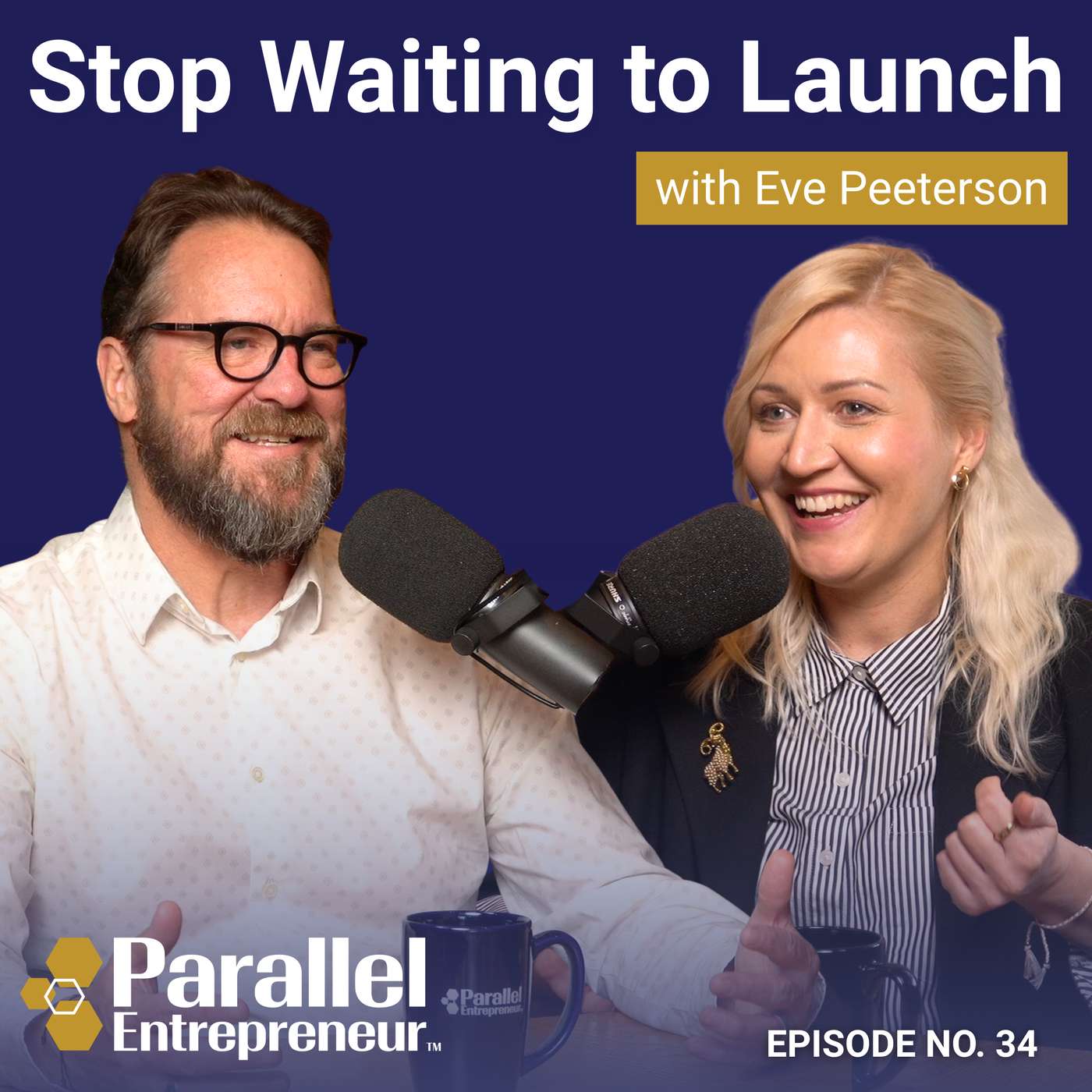
Episode 34 · Eve Peeterson

Why Mentorship Is Broken (And How to Fix It) | Eve Peeterson

Parallel Entrepreneur with Mark Cleveland · Episode 34

0:00 / 53:02
Why Mentorship Is Broken (And How to Fix It) | Eve Peeterson
0:00 / 53:02

Episode notes

There’s a moment in every founder’s journey where the question shifts.

Not “What am I building?”
But “Who am I becoming?”

In this conversation, Mark sits down with Eve Peeterson, an Estonian strategy and transformation leader who has led across private industry, government innovation, and national startup ecosystems.

From working her way up in hospitality…
To leading Estonia’s startup strategy…
To now building a global mentorship platform…

This is a conversation about reinvention, leadership, and what it actually takes to build ecosystems that work.

They explore the real differences between US and European startup cultures, why mentorship is misunderstood, and how the best leaders keep learning, especially when they’re the ones teaching.

And maybe most importantly…
Why your next evolution doesn’t require starting over. Just saying yes.

What You’ll Learn:
- Why “perfect before launch” is holding founders back
- The real difference between US and European startup thinking
- How mentorship should actually work (and why it usually doesn’t)
- Why leadership is the root of culture — whether you like it or not
- How to keep reinventing yourself without losing who you are

About the Host
Mark Cleveland is an entrepreneur, investor, and advisor who works at the intersection of multiple ventures. As the voice behind The Parallel Entrepreneur, he explores how founders build aligned businesses, strong teams, and sustainable momentum—without forcing themselves into a single path.
Follow Mark on LinkedIn

About the Guest
Eve Peeterson is an Estonian strategy and transformation leader with over 20 years of experience across hospitality, creative industries, and national innovation. From leading Startup Estonia to building cross-border initiatives like Nordic Tech Valley, she now focuses on leadership development as the founder of Leadrs.online, a mentorship platform designed to make better leadership more accessible.
Follow Eve on LinkedIn

⏱️ Key Moments
00:00 – If you’re the smartest in the room…
02:10 – Why she came to the U.S. (and what she got wrong)
05:10 – Mentorship: Europe vs U.S.

07:03 – The mistake founders make: waiting too long to sell
08:51 – Reinventing yourself (again and again)

14:24 – “Maybe I am an entrepreneur”
18:56 – Why Estonia punches above its weight

26:40 – Starting over when nobody knows you
28:22 – Why teaching is the best way to learn

31:14 – The biggest hiring mistake founders make
32:43 – Leadership sets the culture

40:04 – The decision that changed Estonia’s future
43:38 – What innovation actually means

49:47 – What she’s taking from this experience

Links & Resources

👉 Join the Parallel Entrepreneur Network:
parallelentrepreneur.com

👉 Subscribe for more conversations with leaders building aligned systems across business, education, and community.

👍 If this episode resonated, leave a comment or share it with someone shaping the future of leadership.

Chapters

  1. If you’re the smartest in the room…
  2. Why she came to the U.S. (and what she got wrong)
  3. Mentorship: Europe vs U.S.07:03 – The mistake founders make: waiting too long to sell
  4. Reinventing yourself (again and again)14:24 – “Maybe I am an entrepreneur”
  5. Why Estonia punches above its weight26:40 – Starting over when nobody knows you
  6. Why teaching is the best way to learn31:14 – The biggest hiring mistake founders make
  7. Leadership sets the culture40:04 – The decision that changed Estonia’s future
  8. What innovation actually means49:47 – What she’s taking from this experienceLinks & Resources👉 Join the Parallel Entrepreneur Network

Full transcript

if you're the smartest person in the room, you're in the wrong room. Uh so you're wasting your time basically. So that's been always my motto, like always be in a room where you have so much more to like learn. And then um teaching, which I'm I'm making a parallel between teaching and mentoring, is teaching is the best way to learn. Welcome to the parallel entrepreneur, where we dive into the minds of entrepreneurs who push beyond the limits of a single business.

Learn how these visionaries invite creative synergies to flow between multiple and oftentimes diverse enterprises simultaneously. Whether you're just starting out or managing multiple ventures, you already think outside the box and this podcast will inspire you to recognize and tap into the power of parallel entrepreneurship.

Today's guest is Eve Peterson. She's an Estonian strategy and transformation leader with more than 20 years of experience across the hospitality, the creative sector, and government innovation. Eve worked her way from hotel receptionist to hotel director. She led Estonia's top event marketing agency to award-winning growth and later served as the head of Startup Estonia, helping design and advance that country's national startup strategy.

She's most recently led innovation and startup services at Enterprise Estonia, strengthening the country's global R&D and deep tech footprint. In true parallel form, she's also the founder of Leaders Online, a sciencebacked leadership mentorship platform. Eve is here in Nashville as a Fulbright Humphrey Fellow researching innovation ecosystems. Let's dive right in. And I thought I just have to have you on the show because this is such an interesting perspective like nobody's going to get it except me. And uh and why I'm going to get it why why I get it is I'm your 2 minutesHumphrey fellow buddy and Vanderbilt patent. are paired me up with you uh to welcome you to our country and welcome to the show.

Happy to have you as my buddy. Chapter 2: Why she came to the U.S. (and what she got wrong) All right. Um, we always talk about the United States, the startups that are successful and all of these different options and and VC funding and all those programs and accelerators that are happening and every you know all these public um academia uh private sector combination networking everything is like like Silicon Valley is the perfect example. It's like a melting pot of all the opportunities that that are there and all the talent like how can we always brought that as the the example of like the success story like how can we and should we even replicate that

and we always kind of brought out these different programs and design different initiatives in Estonia and I I started to feel a bit suffocated by our own you know bubble uh like we we talk about things that we are never experienc experience. So my goal then was to um come to this program uh make new friends uh talk to people uh learn about the programs learn about how these networks are built learn about how these programs are actually designed who's doing that who's responsible for what and then think you know okay like looking back at home now what can I learn from it what should I learn from it maybe I have something actually to bring to the table here and just really broaden my world that like I just felt a

bit like trapped and suffocated uh I would say in my own little uh small world. So that was the kind of reason why I even applied for this internship. Now the critical thing is I never meant to come to Nashville because when you think about like famous startup ecosystems or or cities where things are happening. Sure. 4 minutesUm you know Silicon Valley maybe is not like the role model anymore. Uh but we talk about Boston. Yeah. Like that's the heart of you know the the science and and the entrepreneurship meet and my whole uh acceptance uh like letter uh pages and pages of it was written based on how I will be and what I will do in Boston and how it's the place I should

be. Um and then when the answer came I was like no well um it's actually Nashville. I was so surprised like nobody talks about Nashville as the entrepreneurial center or the startup hub and we are one of the greatest places in the country to start and grow a business. Exactly. But I didn't know that and this has been like the most exciting journey and I I think it was meant to be like this. I think I was exactly meant to be here. Um the learning and kind of the vibe that I've been getting here I think is completely exactly what I actually needed.

Well, the universe wanted you to come to Nashville and here you are and uh we became friends because I was I Chapter 3: Mentorship: Europe vs U.S. had the opportunity to become your Nashville buddy and uh somebody thought I would introduce you around and we would have a lot of fun and we have and I'm what I've learned from you. I'm fascinated about your approach to mentorship. How is mentoring experienced differently in your cultural background in Estonia in Europe, right? And and here in Nashville, what or what what is it that you think is like this thread that you're going to pull out and what what are you discovering?

Yeah, I've really dug into mentorship deep during this uh six past months. uh but thinking about the episodes that I as a mentor myself have been through well there's no there is much less I would say like mentorship is something I would say is more in acceleration programs or or like it's it's somehow designed into different like startup programs it is I would say less popular or less used for leadership improvement in general Well, okay. So, are you saying that you're discovering something here that is more available to leadership?

It is like I think Estonia and Europe in general tends to be a little bit more on the technical side like how do we make this solution work perfectly? How exactly like do we fix this that third? Like how do we make sure that all of your like uh R&D journey goes well? Like what help do you need there? What experts do you need? process map.

So, it's more like let's say um I I just saw this I don't remember who posted it on LinkedIn like there was a graph which was product readiness um in in Europe versus US. So in Europe it's like crap Chapter 4: The mistake founders make: waiting too long to sell crap crap crap always crap up to the point where it's almost perfect and it's like okay we can sell now versus the US it's like oh you're you have a great idea that's an MVP we have an MVP let's start selling let's start like pushing it so on the same like actual readiness uh chart the US um startups and the mentors actually encourage to sell and to actually interact interact with a customer much earlier. So I and that

that's it's not like a good or bad thing but I think we're just kind of holding ourselves back a little bit like making sure the technicalities are perfect before we are you know comfortable enough to show this to a customer. So, and this is a really um what I want to learn and I have personally learned from here is we really need to focus more on the customer uh uh problem, the customer goals and the customer value. So, start from there. Uh don't build a perfect product. Um recently I think there have been more focus also back home uh on the fact that you actually need to find the person who would buy before you perfect your solution. But in general I I'm just

like maybe oversimplifying here but the focus on the customer the customer journey the customer need and everything to do with like we start from there. This is how this reality works. While in Europe we have this great solution we have this great science. we have this great product and then we start to find like okay who might have this problem.

So uh I know that there are both cases in in both uh US and Europe but this is just like something that maybe strikes out a little bit. Chapter 5: Reinventing yourself (again and again) So you were leading enterprise Estonia and looking for inspiration. You apply for 9 minutesthe Humphrey Fellowship. you wind up in Nashville and now you're actively engaged in this idea of reinventing yourself. And I think that's a really important concept too, right? We we we meet the challenge. We meet the customer's requirements. We do all these things. We just meet life. And where we meet life is every day is an opportunity to reinvent yourself. And and we've had some conversations about this. What's

the reinvention uh experience like for you um here in the United States while it's happening real time and where you what do you what where is it taking you? I think I've reinvented myself many times. I don't know if it's a restlessness of some sort or or the constant like uh I'm not enough symptom or not a symptom but u the like a disorder of never never being enough. So I constantly think I need to learn more and h and uh become somebody else during this one lifetime. Um so I've been in hotel business like 10 years complete change from there to uh creative industry. So uh managing um a marketing agency for five years and then from there to start one of the leading marketing agencies.

It was it was pretty big deal. Yeah. and and like the creativity all started from there. So I never thought I was a creative person before going to work in the marketing agency. And then when you let yourself be surrounded uh by these creative uh artistic people who just are like designers and performers and whatever, you start like quietly going to these, you know, um meetings and you see, oh, I I had an idea. Oh my god. And this this idea actually got implemented and I was like copyrighting at some point. I didn't even know what copyrightiting is two years ago. So you you just like allow yourself to become a new person. You didn't even even know that you had it in you. I was like I'm I'm not an artistic person. I'm not like a creative person. Everybody really is.

U so so the reinventing oneself has really been in me all this time. and then going to the public sector which was a completely different struggle in a very positive way because there is no greater mission than to really work for not just yourself and your company's owners but for the society I mean the pressure is so different and to experience that I think everybody should do that like work on the private and the public sector side because working in this uh Estonia's biggest innovation agency we were always like in somebody's his hair like like a a person who has never worked on that side is like oh the government they don't know what they're doing they're wasting money they should just like fire everybody like these people are just sitting

around there but exactly I don't I have a lot of friends in government and various state local uh federal I don't know anybody that goes to work every day thinking I'm going to waste time. I'm gonna just like clock in and and regulate something that doesn't matter. I I don't know anybody that wants to live that life. And I don't believe that people in our government actually go through their career with that attitude. It doesn't make sense to me. It's just a it's a sound bite I think that people grab onto.

Yeah. But I think Mark, don't you think sometimes we live in some sort of bubbles? Sometimes I think we live in kind of our cute bubbles where people have all are all missiondriven and are like this all in and you know let's be you know leave something after ourselves legacy or you know we driven. So I I'm sure there are different people everywhere like in private sector I mean I am sure not everybody is like oh I'm so focused this there this oh I'm going to we're just going to make it. Well, we do see people that like to hide in organizations.

Yeah, there are always going to be public, private, doesn't really matter. Well, so the challenge then it really doesn't matter which organization you're in, but the environment gives you a new perspective, right? So you now you're in the United States, you're moving around, you're going to Austin, you're going to South by Southwest coming up, right?

What's the journey like for you as you explore entrepreneurship, mentorship, and innovation in the United States? I had been designing public services but I had never any clue how to actually do that. What's the process be behind innovation? What's the process behind design thinking? What is it? And so that was actually the trigger that I started to um dig deeper here. So that's my new like transformational period like how to be a better design thinker uh innovation practitioner. uh it's been a really a great journey but it also this transformational period has allowed me time to think and that's another kind of a dogma I always had about myself I don't have a business idea I I just don't have it I'm just like a person who's like

enabling others uh because I'm just a I'm just a leader I'm just a manager like that's not a trade and now I have Chapter 6: “Maybe I am an entrepreneur” been here for more than six months and I've discovered okay but that is that actually is something that can be made into uh an entrepreneurial like uh venture. So, so that I'm pursuing now is what if I really did something on my own or what if I applied a completely new set of of skills. So, coming back to this question, um I am here experiencing as much as I possibly can. I think during the the 10 months that I will be spending here, I will have visited maybe 12 states. I don't know how many cities and really I want to meet people,

experience nature as well as like conferences. There have been great speakers even in Nashville like the the people that they bring just to the University of Vanderbilt to just speak um because they're alumni or or in any way uh attached that there is just so much expertise in one room. It's like just uh it drips. it just it drips. And then South by Southwest, I've heard about it so much that it's the greatest thing on this side of the the United States. Um so the innovation, music, and um movie and a festival like all in one in one week.

Nothing against Austin, but you're starting in Nashville, so you know, you're going to go down there with sort of high expectations. Let's see if they can pull it off. Let's see. Let's see. And there's always a fight between like who makes a better barbecue, right? So I can be like the the neutral uh them's fighting words scientist.

Well, so so you're you're you're going to do that and you're going to head up to the Great Lakes area. I think you mentioned uh in an earlier conversation. Yeah. Uh Chicago was a surprise to me. Um it was a little bit like between New York and some other city which I can't name. maybe New York and Nashville is it was fantastic and I was um spending a few days there and I was sure I want to go back. Uh I do I am going to go back but not for that long. Um so just for um uh like it's a leadership um training let's say but uh the the month in Austin um is where I really want to immerse myself into like where do the startups like have their offices? what

do they do the capital factory where it's like the hub um so much like we have these hubs like uh back back home so I want to just like see is it different is it the same because I think the vibe so far has been so similar that it's like do people eat different things or do we talk about different things or what is the what is there different or is it just that that the sheer amount of just venture capitalism more like what is it um and can we then replicate it or or or change something.

Well, it sounds to me like you also want to have what is unique in Estonia be a part of the root of whatever you know emerges there. Uh, entrepreneurship is not easy and I think that we should celebrate our entrepreneurs wherever we find them and and build them and grow them and uh team building seems to be one of the core issues that any company has. Team building culture. How do how do you what are the differences that you observed so far when you got into an American startup versus the European startup?

Yeah, team building definitely we we talk about the same things especially when it's a very deep science-based uh team or an idea that's just fresh out of a lab. Um, and there's probably I don't know sometimes it's so unique that there is nobody that understands you and maybe you know how do you find a co-founder for something that only only you understand or maybe a couple of other people. So that's where having more people actually is useful happening here. uh and and maybe the fact that there are more programs than that to take you through that kind of first few steps uh before you you know get to the valley of death and whatnot.

But um in Estonia I think what what is really great is like we are fewer but we have really great like uh startup visa Chapter 7: Why Estonia punches above its weight system and we I think a a third of all of our startup employees are actually f foreign founders uh foreign uh people. So we we made it like um a very deliberate we yes deliberately imported deliberately made it a point startup friendly and it's not just that that we are few we know actually for a fact that diversity uh makes really a big difference in startups. So Estonia has been like number one in the number of startups, number one in Europe, number of like uh unicorns per capita of course I mean we're not like but so so we are really deliberate about like making sure

that everything that we can do bring the people in bring the talent in do the programs I mean really mix it up like take it to the regions um so so that is something that we we have done and also because it's still not enough um I've tried to kind of take the Nordics Baltics together, let's say eight countries, and create like a Nordic tech valley. I just call it like cute. Yeah.

Nordic tech valley vision where we kind of make it easier to see other programs and other teams in different countries. And we're so similar in terms of culture and how we do business and the work ethic which is really really high. I mean people are smart and they work hard. So how do how do we make sure we find each other easier? Uh also the mentoring platform that I'm I'm kind of building now is meant to make it easier to onboard different experts from across borders because like what happens here between states is us doing things between countries. So we just need to make ourselves deliberately bigger and have more uh and in depth of expertise,

capital and everything knowledge. I've been in Europe a number of times and always marveled that I could be at a nightclub or a lunchon, you know, some a cafe and there's six different languages being spoken audibly within, you know, I can hear there's French over here and there's German over there and then I'll come to a Starbucks and the only thing I'll hear is tall skinny, right? Um, all English. And I'm I I I wonder it's always made me curious does that rich multilingual foundation of the of of that universe is that a competitive advantage? Is that a creative level up? What do you think on a personal level, individual level? I think it's a it's a very big like plus.

Um I'm a philologist and I'm a fan of linguistics. like by my first uh masters. So I I really believe my first masters is in linguistics. Let's just throw around numbers here. Um no but uh but really I I am I I really think that how we speak and our language so much um defines how we I don't know behave think and I don't know it's it's maybe weird but like a same person talking in one language versus another it that they become a different person.

words have meaning, right? And different languages approach the connotations and everything like some languages don't even have that like um word or some are really simple in grammar and really hard in like intonation and some are completely vice versa. So I mean okay but that's another story but on a let's say entrepreneurial level it's of course harder because now when you think about the European Union for example like if you want to sell to more than one country which is always the case as we're talking about like a a startup like a tech startup you you need to incorporate into different languages cultures etc etc etc so it's a good thing now European Union is working on EU Inc. which would be kind of the

28th regime which is kind of a let's say a fictional country uh a regime that would m enable you to incorporate a a company in 27 member states simultaneously. So that is like a very big step forward now which which Europe is working with and and for the startups that are we're basically born global. We we have to have the global mindset otherwise it doesn't make any sense like Estonia is a location. It's not a market. So, so we're very global and that helps but uh individually I think it it it wires you to it just builds your brain muscle I think as well like you you just think so much of the challenge of running an organization is related to communication whether it's a product document a

product definitions document or a memo to try to set policy and you you you're working those muscles a lot and it's just a beautiful thing um I I I I just am aware that I speak English and I pretend to speak French and um I better not go anywhere where I need to have another language. Um this is a this is a a fun question. You you've tell me what it is that surprised you the most about entrepreneurs that you've met in in your experience so far in the United States.

I think I've met less entrepreneurs than you think. Um my days are spent a lot of them are spending in the academic setting and meeting like these support organizations because mainly my goal was to meet the enablers the community organizations that enable all of those fancy things that the that entrepreneurs can enjoy.

But um you are one of them uh the exceptional entrepreneurs that I've met and you can just do so much. I think in that sense you work hard. Uh you also play hard but like the I think there's never a time off. I don't think it's very much different from any other entrepreneur in 25 minutesin any other country but even the fact that the the entrepreneurs I met here still make the time to do those LinkedIn posts and share the information and and they are the busiest people ever. I think that that how your work is presented and how you talk about things and how you you have that presence let's say LinkedIn is much more used much more

utilized much more carefully designed and and um and and and also the other thing is nobody's afraid to sell like nobody's afraid to talk to customers. I think that's something that maybe we're more I don't know um Nordic or something like more closed. So we need to learn that. I think there like a sales or talking to people even the chitchat are just like so how are you how do I even find out like what what what you're worried about? How do I find out like what you are happy about as a customer?

it takes like a struggle more of the times in Estonia than here. So I think um and also maybe you have more competition. So that's like there's never anything just good or bad. Uh it's just a it's a different setting and you have your different fights, let's say. So if you if let's say if you make it in Estonia you might have this illusion that you made it because there's less people less competition less like of everything to and then even me like I thought I was Chapter 8: Starting over when nobody knows you somebody like I was on TV I was on radio I come here like nobody knows me I'm nobody and it's it's good in one way but it's also like if I needed to start like my life here now to prove something or to start something, initiate something

like the the company I'm I'm working with right now, like I have this business idea for the first time in my life. I'm scared like how do I even start? I'm nobody here. So that sense I like the idea though and and the idea for our listeners is related to networking mentors and and I think that you're taking you've done some serious formal academic study and research on mentorship. I have been talking about what I call reverse mentorship. I would like to see, let me bounce this idea off you. Maybe it'll get into your product plan, but I I'd like to see where uh we're measuring the upward mentorship. like what did I learn from this mentoring session that I had not just what was the feedback like in

my experience most of the time it's I'm writing a report so to speak about what needs to happen or the changes or the observations or the concerns whatever it might be that is about this mentoring topic you know that that's in front of us and what I find when I'm super engaged is that I almost learn more from the mentee uh so I'm thinking this two-way mentorship thing is good for mentors. It keeps us sharp. It It brings our own skills and talents forward. How what do are you seeing anything like that? Is that in your product plan or did I just get it in edgewise? Chapter 9: Why teaching is the best way to learn It is in the product plan. Um one thing that I'd like to stay from the start is like if you're the smartest person in

the room, you're in the wrong room. Uh so you're wasting your time basically. So that's been always my motto like always be in a room where you have so much more to like learn and then um teaching which I'm I'm making a parallel between teaching and mentoring is teaching is the best way to learn like when when you thinks of something and you become an expert in that and then you think you know it but then we need to when you need to explain it to somebody or get omebody on board with the idea or or see what their perspective is on that, you will think about it in a different way. You will put yourself in the other person's shoes and try to think, okay,

how might I explain this in a way that is useful or applicable for them. So, you start to think about your own ideas in a different way because the only way mentorship works is if it's situationalized and and personalized to that person. It's not like there is one truth. I learned it and now I'm just kind of, you know, giving it to you and you just better take it and like it. So it's uh it's I think any fun at all. No fun.

So um so definitely I I think you're you are completely right in that because it's it is like teaching. It's the best way to learn and to surround yourself with people that are and also young people they know different things. I mean, we can't possibly uh keep up with with everything that's going on. And by just like opening up yourself and then the other person for that conversation and that exchange of expertise of or or the lack of it in in some cases, it it just is it's just magic. And what what I'm thinking like my big insight is like everybody is a mentor. And this is like one of the things that I I started thinking about coming here is there are so many experts out there who think mentorship is

something um I don't know fancy or something that they need to I don't know learn in a school or or they are not enough to be a mentor. Uh so I want to change that. I want to enable people leaders especially to kind of learn how to be a mentor. there's not so much there's just a few rules and some like good advice that they can take and make that expertise uh more available to different leaders.

I mean this is I think we're just locking so much into people who just don't are not aware how they could share that knowledge and there are no really good ways to do that. How who do you become a mentor? Like what's the door? Where where do I knock? Chapter 10: The biggest hiring mistake founders make Years ago I first got involved with Michael Burcham, a mentor of mine in and whether he knows it or not, you know, I paid real close attention to everything that he did. And uh I came through a a mentorship training program at the Entrepreneur Center in Nashville, which is where we're actually recording today. And uh I wanted I did that because I wanted to become a better mentor myself. I wanted to learn how I could mentor inside my organization. I got to sit down with him

and and I asked him, 'What do you think is the the mistake that most entrepreneurs make? And he said, "Hiring people you can afford is the number one mistake we make." And I've got clients and um you know, I'm in the M&A business, so I I I see lots of different companies and and and I I've I've never lost that. It's difficult to reconcile. you know, you're a startup, you don't have the money, but you need this kind of talent. You have to be able to make that deal, whatever that deal is, to get that talent into your organization.

And yet, many of times, we just don't because of these constraints. We don't think outside of whatever that constraint is. That that's a constraint. I can't afford that person. I can't hire that person. That's the biggest mistake we make. Mhm. And I look back on my own career and uh I think it I think he's accurate. I think it is the number one problem.

Hiring people that we can afford is a mistake. Chapter 11: Leadership sets the culture Yeah. Um and I will like put one more layer there. Um then again the from the kind of the culture company culture uh view towards then the leadership like first it's it's really um 33 minuteslike the the leader the manager like creates the culture like with every decision that they make they will create the culture. It's not like things are haphazard and things are like weird and then we do this company culture workshop and that will fix everything. No no the leadership sets the weather. It's like from like how you step in from the door up to the point like how you pick up the call or leave the room or or how

you set meetings or whatever that that's the culture. So um my obsession with this mentorship now is is partly also due to the the leadership culture which is which keeps on traumatizing people like the number one reason for people to leave work is because of their boss. I mean, how can we afford this? And this is just a question that is kind of bothering me.

We have this like special um like potential in leaders uh to become 34 minutesmentors so that all of us can become better leaders. And I I just want to kind of I think there is like we need to kind of put that all into one box somehow because we shouldn't tolerate bad leadership. We we should not because we can't afford it.

Amen. I love the idea that Estonia from a startup perspective is punching above its weight class. Let's just drill into that a little bit more. Give us some statistics. Tell us what you're proud of. Yeah, I'm happy to. Glad you asked. Um I mean Estonia has is kind of a country which is small like very few people 1.3 million um and not a lot of natural resources not even mountains or like waterfalls or anything. So um what do we have like our people our brains um that's what actually Nashville says about themselves as well. So I I I already like see resonating back back here. Uh but what was a really cool thing in the '9s um the president at that time uh we had just regained independence. I was there.

You were there right? Yes, I was. I was in Moscow in uh the moment which on the day that Latvia, Estonia, Lithuania voted to separate and that was the beginning of the end of the then Soviet Union. That is crazy. Very very exciting time. a wild um the singing revolution, everybody holding hands, the Baltic chain. This was just I mean I was 10 so I don't remember all of it but um that was a crazy time it yeah but I'm happy I I actually lived through that like the singing revolution like whoa like people sang for freedom.

Um I don't think you may go go a bit further with that. I don't think people know this story. What happened singing for freedom? Uh yeah, it's like people started gathering uh right before the actual collapse of the of the Soviet uh Union like the secret night song festivals. I mean song festivals themselves have a long history um like back into the like enlightenment times of of the Estonian culture uh in general.

And the these song festivals happen every four years but they had become this national symbol of identity and freedom and Estonianness. So I guess that was the point where people thought like this is something that unites us all like this song festival that they were at night gathering in this song festival grounds just singing like these um amazing national songs about like freedom and and such things. So um it was definitely not like viewed upon very in a in a good way but but this was how people united. This was the uniting 37 minutesforce and everybody came together and then that's why we call it like a singing revolution because everybody came like hundreds of thousands of

people just gathered to sing together and that was like that stayed as the symbol of independence and and kind of regaining that independence of that sense of no matter how much I hate my neighbor right now we will go together and sing together tonight and until we become free and then we can you know continue being you know annoyed neighbors but that moment of really kind of coming together that state so that's why we call it still like singing our to into our principle it's beautiful you actually my wife Jenny and I host uh song circles at my home and it's a foreign thing for most people but it

would be like as simple as uplifting spiritual ually uh rejuvenating hort songs that you can learn in five minutes and everybody sings and and it might be 20 30 people in my house and you came to uh to a circle. I'm scared. What were you scared about? You went through the singing revolution. I don't Yeah, but I don't really sing unless it's like a choir of thousand people. Yeah, unless your voice is lost.

Yeah, exactly. Exactly. Well, I'm here to tell you, you have a great voice. And I think that voices, this this um muscle that we exercise, it carries with it a signature. It carries with it love. It carries with it voice. Uh like you mentioned earlier, intonation and language. And um I I I think there are far too many people that don't use their voice and don't um in a metaphorical sense as well.

Yeah, absolutely. um singing as a muscle or using your voice to communicate 39 minutesas a first option instead of being um lost, right? Yeah. It's like breathing. It's like it completely takes you into another place and you can't be mad anymore or you can't be sad anymore. It's like you transform yourself in a very particular way. Nobody Nobody sings with a frown.

Yeah, exactly. You can't. Um, I love how these conversations with you always like start from one place and there's like no way of telling where that sentence will end. So about that startup ecosystem. Yeah. Punching above its weight. Punching above its weight. It's like, okay, so we're this independent young democracy. What do we have? Like we're few. We don't have a lot of like anything. Uh we're poor. um we need to somehow make ourselves bigger and more and and better. So um we had a very a very clever president at the time Leonard Murray and also the uh the minister of foreign affairs Thomas Andre Kilves who also later became president. Chapter 12: The decision that changed Estonia’s future

So they came up with the idea that uh the internet was a kind of a new thing and they didn't know exactly what it will do but they knew that it's a it's a way to make ourselves bigger. uh in in a way that doesn't need necessarily you know um drawing our country you know uh lines in a new place but um so internet was a thing and computers were put into each school. So this is what we call the tiger leap. Um, so first it was maybe fun, you know, guys got to the computers and played video games and it was just like a fun thing to do. But now if you talk to those tech founders, um, nine out of 10 will tell you like if you ask them, so how what's your story? Like how did you become this successful founder?

Oh yeah, I started to play with a computer at school. So now they just got bored and then they said, okay, what else can this machine do? And so that that's how they started to learn programming. And that's kind of like really the story. And uh fast forward to Skype. I mean Skype was invented by Estonian engineers. And when Skype was um like did an exit of course it was bought by uh eBay. Yeah.

First um another unicorn. So yeah, it was like a unicorn. It was a success story like nothing before. like what came out of the Skype sort of the event or the big bang was a lot of uh capital, a lot of talent that knew how to scale a global company. Uh and there were so many new tech companies that were founded at this time that now it has taken us to this new waves of new unicorns and is like breeding new waves because of that one explosion. Of course, there was also other things happening because um you know planets need to align and and together with a Skype effect of of course there was a at that point a clever um like governmental um decision made like we need this umbrella organization like that's how

startup Estonia was also uh born like we need some kind of bigger plan a bigger vision to make sure we use all of this like little sprouts that are coming up of this that we just make sure we use all of that. So all of the startup visa and of course our digital uh infrastructure of the state it makes it really easy to start a company and to take it um to take it global. So I mean that was a very wise decision and uh and the community this is what I see here as well like how people help each other out and how you can get to everybody really uh fast and and everybody wants to give back. So that is the sense of community and I've heard this uh spoken about so much in your uh previous podcasts as

43 minuteswell like this is the this is the same vibe like you can never be a successful ecosystem without that you know the the close-knit community and the supportive kind of services and the infrastructure and also the people you need to know. So I'm yeah that's the story. I think we recently had a miniseries. So I've been experimenting with the parallel entrepreneur podcast and most of it's been you know one-hour format kind of stuff and then we started doing some really short format and the the purpose was to discuss innovation and it was really with a a lens on on Nashville. Chapter 13: What innovation actually means And so we've been talking around this subject all this session really about innovation. And I'm curious if you were to try to put a a pin in it, you know,

what is it that makes a company innovative? What is it that makes a person innovative? And then if we're trying to reinvent ourselves, how can we be more innovative? Ah, you gave me a big one here. Um I was I have been thinking about this so much and the best way to think about innovation is not to mention innovation in a way because it's such a big term.

It's like when you tell somebody uh I would like to help you be more innovative which is what we as as an innovation agency wanted to do then it kind of has this awkward effect where um the founders may even like pull back. It's like no it sounds like too fancy or it's not for us like we just do what we do and you know because innovation it has so many things in it like what do you want to do better do you want to make more profit do you want to I don't know uh be a better employer do you want to have a a fancier I don't know product do you want to be like change completely the the way the business model uh do you want to What is it that you want to

45 minuteschange? And I think like we've maybe scared a lot of um I'd say mature companies at least like startups they they are fine but like I'm talking about the the mature company who's maybe a bit scared by the word innovation like we need to maybe change the way we talk about it at least in Estonia like how do you want to be better? Do you want to be like get better people to work for you or do you want to just make more money like be happier? uh or do you want to just incorporate like uh digital processes better so that you can actually do work faster and like do less like stupid things. So that's that's one thing but uh uh for me I've just learned

I'm vetting I'm I'm betting do less stupid things. Exactly right. Uh but the way I love to think about innovation right now is all thanks to Dave Owens, the professor at Wandry, uh who teaches innovation through six constraints. And I love how he puts it like let's say normally a boss comes to you and says so um you start like bringing me some new ideas like I want to do something cool. So give me something out of the box. So what you do is go and think something really crazy and really like wow and then bring it to the boss and they say no too expensive no too risky no d all those things. So what he says is like innovation has six constraints like there are individual constraints team constraints organizational societal industry and

technological. So you don't need to think outside the box but rather inside the box like where all those constraints are dealt with and met that leaves you if you think about this vin diagram like there are these six no can do areas that leaves you only this little middle piece where you can actually operate. So that like that that takes all of the people to be creative, the team to give you enough support and like emotional you know confidence to even bring those ideas to the table that needs an organization that has a structure and processes that enable you to be innovative and it needs like the society to accept that innovation. It's like, I don't know, Segue for example. Like,

yeah, who cares? I I want to get on a Segway once and then after that I'm a policeman in an airport. Where do I even take it? Um, and then the technology needs to work obviously and then the the industry uh needs to kind of the the ecosystem needs to uh approve that and and be able to like everything around it needs to you know make this feasible. So it leaves you this middle space where you can actually do innovation and like how you go about fixing those. On some things you have more power over some things you have less power but to know like what is your biggest constraint and kind of try and work around that and make sure that like you make that little space bigger to give you like a more room for that

innovation. Uh so that is that is I think this is the most genius the simplest way I have ever heard anybody explain like and take it to practice and you talked a little bit about not having the resources so you have to be more careful with how you allocate time for mentorship and who gets that resource and so that's a constraint. Um, some of the most creative projects I've been involved in are are starting with the constraint in mind. And what can we do within that box that is our cage, but in fact is our competitive beach head or our our landing place for innovation.

That's really interesting. I appreciate that. Um you you uh you've got a opportunity to to land with like like if we were to say we're closing this conversation out. What what's the question that you thought I would ask you that I have not? Um maybe what did what do you ah no I don't know actually you you asked me a lot of questions um and I think I said more than I planned to um maybe yeah something that what I will take home from this experience because it's been like an academic journey and

business journey and social and and individual journey. So, I'm just going to ask myself, yeah, what do what do you what are you going to take home from this experience? Chapter 14: What she’s taking from this experience Yeah, I really want to tie it back to the starting point where um we said like you constantly reinvent yourself and I really reinvented myself here and I found these new ways that I could be like the new me that are all possible and I really believe that like we've talked about this before but that the universe has like this multiple journeys laid out ahead of you and you just have to be brave. brave enough and maybe say yes more uh and open more doors to kind

of just let yourself carried be carried onto those onto those journeys. Uh not like in a way where you have to push yourself because that's going to maybe create a friction but just believe that you can become somebody that you want to become and then go and and become it. I think I have become a much better person with this experience. Like I've met so many different people like my understanding of cultural differences. I thought I knew what it means to have cultural differences. Uh-uh. I did not.

And I think it's something you can't read from a newspaper or book. You have to experience that. And what it means to have different perspectives and and backgrounds. Uh what it means to be entrepreneurial. Definitely. I think I I learned this here more than any time before and that I I'm continuing to to reinvent myself. And I think this is a an experience where you just take yourself if if you ever can or whoever is listening and needs that push right now to take this time somehow and and give yourself this this space and opportunity to just sit around, not put the TV on, not read anything, and just kind of let yourself come up with crazy

ideas or discover things that you were curious about because that's the that's the hard currency, right? Curiosity. Yeah. I've heard it said that and boredom is when your mind gets enough rest to actually be creative. Yeah. And when we're pursuing so hard, so much doing, we don't get the opportunity to just be pleasantly bored.

And then you make different connections under those environments. You know, that's a that's an interesting Well, I hope you're not pleasantly bored in Nashville too often. No, no. I keep myself busy. U Yeah. Thank you, Mark. I think this was just meant to be. Like, thanks for being my buddy. I love it. Love it. Hey, thanks for listening to another episode of the Parallel Entrepreneur. And thank you to our sponsors, partners, and the special team behind the scenes that make it all possible. Be sure to like, follow, or subscribe to our podcast and get the latest updates. And to learn more about this growing community of entrepreneurs, our mastermind and companion program for your parallel entrepreneur journey, visit parallelontrepreneur.com.

And of course, thank you to all the visionary guests who trust us to share their stories.

Building more than one venture?

The Parallel Entrepreneur Network is a private, vetted community of founders running multiple companies at once. New to the idea? Start with what a parallel entrepreneur is.

Apply to the Network

← All podcast episodes