Episode 28

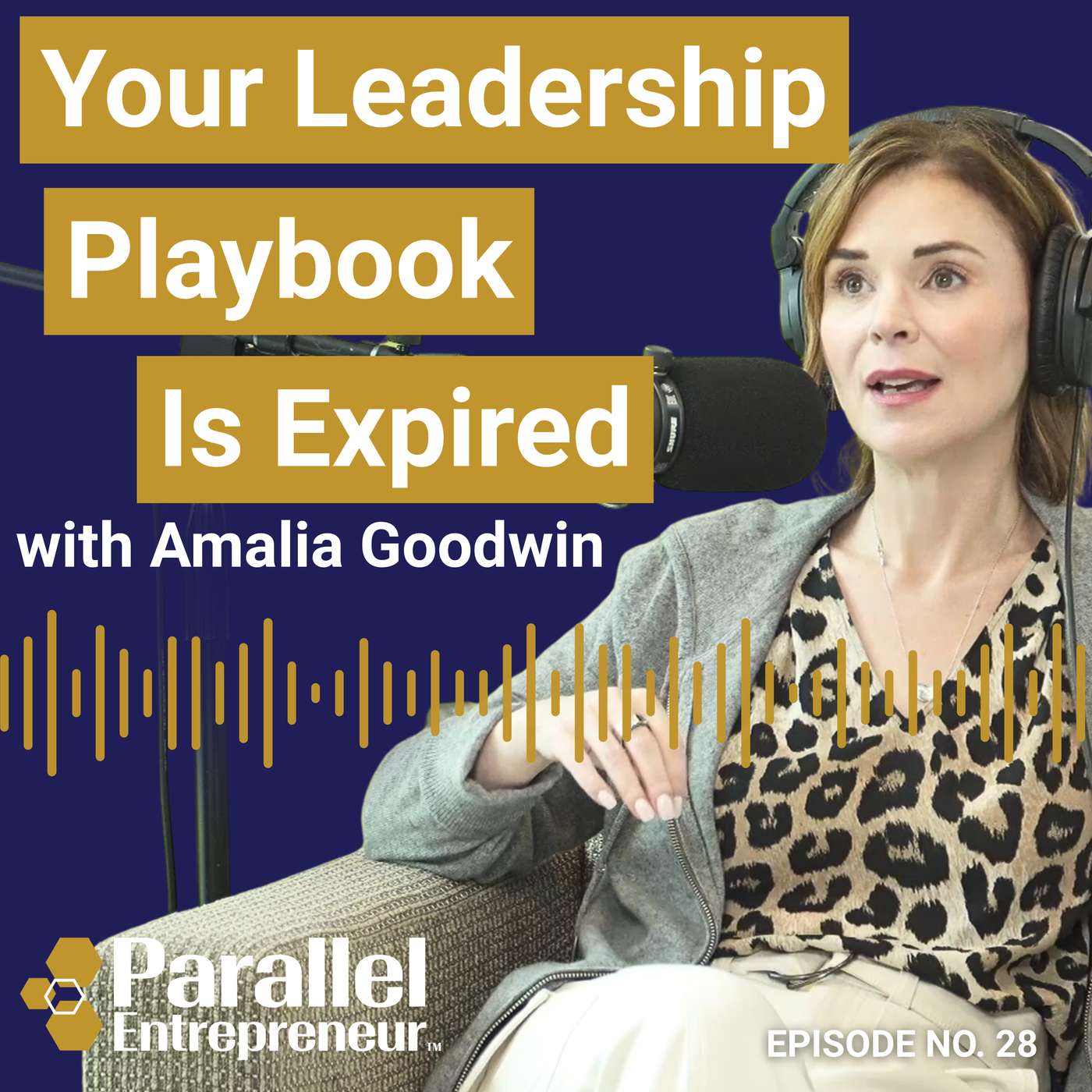
Why Today’s Leadership Playbook Breaks in the Age of AI

Parallel Entrepreneur with Mark Cleveland · Episode 28

0:00 / 17:38
Why Today’s Leadership Playbook Breaks in the Age of AI
0:00 / 17:38

Episode notes

The leadership playbooks that built today’s successful organizations were designed for a different world.

In this episode of The Parallel Entrepreneur – Innovation Series, hosts Mark Cleveland and Johnny Anderson sit down with Amalia Goodwin, Global Managing Director of Adaptive Organizations at Slalom, to confront a reality most executives quietly avoid:

Incremental change is no longer safe. It’s organizational suicide.

Amalia works with C-suite leaders and boards who understand that AI transformation isn’t about tools, it’s about redesigning how organizations sense, decide, and evolve at scale. This conversation goes far beyond technology and into the deeper work of leadership courage, organizational design, and the role companies play as architects of society’s future.

We explore what it actually means to build an adaptive organization, one capable of continuous reinvention rather than reactive survival.

In this episode, we discuss:
- Why AI transformation fails without leadership courage
- The danger of applying yesterday’s playbooks to tomorrow’s problems
- What “innovation metabolism” really means inside organizations
- How leaders can balance quarterly performance with long-term survival
- Why organizations must see themselves as civic architects, not just profit engines
- Designing decision-making systems that can keep pace with exponential change
- The overlooked societal impact of AI governance and organizational choices

Amalia brings insights shaped by 25+ years and 100+ global transformations, blending strategic clarity with moral responsibility. This is a conversation for leaders who know the future isn’t something you react to, it’s something you design.

About the Guest
Amalia Goodwin is the Global Managing Director of Adaptive Organizations at Slalom, where she partners with C-suite leaders and boards to reimagine how organizations lead through exponential disruption.

Her work focuses on the intersection of AI transformation, leadership courage, and organizational responsibility, helping companies design systems capable of continuous reinvention. Amalia is a recognized thought leader on adaptive strategy and organizational courage, with insights featured in Fortune, Forbes, HR.com, Unite.AI, and Slalom’s global research on AI-enabled organizations.

She is known for introducing leaders to what she calls “innovation metabolism”, the capacity to transform fast enough to survive, without being consumed by change itself.

🔗 Connect with Amalia on LinkedIn:
Follow Amaliagoodwin on LinkedIn

About the Hosts

Mark A. Cleveland
Managing Director at Kensington Park Capital, entrepreneur, M&A advisor, and host of the Parallel Entrepreneur Network
Follow Mark on LinkedIn

Johnny Anderson
Nashville tech leader, GNTC board member, Entrepreneur-in-Residence at the Entrepreneurship & Innovation Center, and host of The Impodsters™
Follow Johnnyonbrand on LinkedIn

Links & Resources

👉 Learn more about the Entrepreneurship & Innovation Center (EIC):
wcs.edu

👉 Join the Parallel Entrepreneur Network:
parallelentrepreneur.com

👉 Subscribe for more conversations with leaders building aligned systems across business, education, and community.

👍 If this episode resonated, leave a comment or share it with someone shaping the future of leadership.
Chapters

  1. “Courage feels a lot like fear when you’re in it.” (Cold open)
  2. Episode introduction + why this conversation matters
  3. The systems that made you successful won’t survive the AI age
  4. Why incremental change is actually dangerous right now
  5. Amalia on helping organizations succeed in a technology shift
  6. “The definition of value is changing.”
  7. How companies are evaluating AI strategy (M&A lens)
  8. Adaptive leadership + reinvesting in continuous change
  9. Learning velocity as a new measure of value
  10. Decision velocity: when do leaders know enough to move?
  11. “Innovation metabolism” — how leaders fuel themselves differently
  12. Addressing fear in strategic decision-making
  13. It’s okay to be afraid — making AI adoption fun (Bingo + games)
  14. The moment AI “blew me away” (and rewrote an SOW)
  15. The real leader work: humility, new mindsets, new skill sets
  16. “Courage feels a lot like fear when you’re in it.” (Expanded)
  17. Relearn vs. Unlearn — why unlearning is harder
  18. Six-month roadmaps vs. 3-year plans
  19. Massive 30-year transformative vision
  20. AI as a playground — bringing back play
  21. Hackathons, bake-offs, and low-code teams winning
  22. Agentic workflows + giving unexpected leaders a stage
  23. Closing: “A bake-off sounds like the right answer.”About the Guest

Full transcript

There's a whole leader session and set of work that we have to do and build new skill sets and mindsets and one of those is having the humility to know this is scary, and we're gonna work through this together and being able to say that as a leader. I think courage feels a lot like fear when you're in it. Yes, yes!

This conversation isn't comfortable and that's the whole point. Amalia Goodwin is the global managing director of adaptive organizations at Slalom and she works with executives who already know something most leaders avoid admitting. The systems that made them successful won't survive the AI age. In this episode we dive deep into two ideas that challenge the status quo: 1 why incremental change is actually dangerous right now.

and 2 what it means to lead organizations that can sense decide and evolve fast enough to stay relevant. If you're leading through uncertainty and everyone is this conversation offers a few nuggets you'll appreciate so let's dive right in. So I'm all about helping organizations be successful and this technology I think levels the playing playing field in so many different levels.

So it's so much fun. That's awesome you're Portland Oregon right? I do live in in the West Coast, I have had you know ventured out living in North Carolina and other spots so I do love when I get to come play in the south as well. Well I'm from Eugene, Oregon so. You are. And I lived in Portland for 10 years and I've got to say welcome to the south.

I appreciate that. Go Ducks! Go Ducks! Go Ducks! Yeah I'm, I was born and raised in Idaho. And really I've spent most of my life in the northwest in Oregon and Washington, Seattle and Portland, but I always love coming back down to Nashville into the triangle. That's probably you know I sort of think about like the third act of my life and what's that gonna look like?

And it and like this keeps calling me back so We'll see. Well come on down, come on down, Actuall, no. We're full thank you. You're full. Yeah like I say this and when I I will talk to folks and when I go back to Idaho like but hey I like I did my undergrad here I did my high school here I was born and raised you have to accept me back.

Even though I left for a minute. So what is it? What's. We're On behalf of the Greater National Technology Council, I'll ask the question, what is it? What do we have here in Nashville. You know what you have is, you have an interesting I guess the like spark is the first word that comes to my brain. You have a energy, that is around people and culture but is friendly to business and innovation.

And being able to bring that secret sauce all together and have fun with it. I believe creates community right. So when your businesses are thinking about your community and when your education systems. And what we you know what I got meet some amazing people that are really trying to think through how do we think about education very differently?

Because we should. I don't see that I. I get the privilege of going to many different cities and around the around the country I don't see this everywhere. So it is pretty special what you've created and the excitement that the businesses have around okay how do we do this how do we think about this how do we involve the community.

Inclusive of the education system, that just doesn't exist. So I've been like everybody sort of addicted to this conversation about AI. And I'm gonna tackle it from a different angle. I think the definition of value is changing. What is value? What do you think is changing? Well I was in a conversation with a client this week and I I do M&A work and yeah and I and everybody is looking does does the guy who's gonna buy you have a better strategy than you and are you moving in that direction.

And everybody's evaluating AI strategies specifically. But the companies themselves often seem to wonder, let's say for example; if we could just get this project done in six hours that used to take us 60 do we value do we pass that value on to the customer? Do we pull that value inside? What is the value of the service we delivered if we now know it can be done in six hours.

Yep. And all of our perspectives are defined by 60. And these are 10 x changes in everybody's life. Internal and external perspectives so there's a war I think going on about the definition of value. I'm curious how you see that playing out? I think that's a really great and a good perspective to have. What occurs to me about value is when you save that time.

I think a couple things are happening one is there's people are like you often hear "it didn't work" I'm like yeah you got savings you got leakage. Cause you haven't redefined what you want people to be doing. And I think value starts to like. I think the organizations that will succeed is going. The value is gonna be how do they continue to reinvent themselves.

So we call it like how are you like continuously like being an adaptive or an adaptive leader. But it is reinvesting in the continuous change that this technology is bringing. But I also do think how an organization measures itself like there will always be the tried and true things that you're looking at from an M&A standpoint and from a business standpoint for sure.

But I do think it starts to shift and so you are going to start like. What I'm valuing and what I want out of the teams like I get the fortune to work with and manage are what is your learning velocity? Like how fast are we learning and pivoting so that we can help our customers differently? And learning velocity isn't training courses it's behavior changes. How how are we thinking about in an innovation cycle and an innovation metabolism where we take ideas to how fast can we pivot those ideas to actual revenue.

Like that is a different value that we need to start thinking about. And how do we think about the the decision velocity that leaders have? Like that is of a different value that. And what will stop and slow down organizations is wanting to be sure and that is really hard. Like it from a leader standpoint wanting to know all the answers before you move forward.

And knowing when do we know enough to start testing and playing. And in a way that's like often and you hear Amazon talking about a two way door so when is it where we can still play and it's not cutting us off and and where do we need to really slow down and go slow? We are we're treating everything like as a slowdown.

So I think valuing and decision velocity. So I think there's a whole and then like what is the overall experience we're creating for our customers and our people? That will be of a different value as well. Like I think it all does start to shift and it becomes more than revenue, revenue is always gonna be a a judging stone.

But I think your ability to create new revenue because all of our expectations change is gonna have to shift cause you're thinking about it very differently. I love this the term innovation metabolism and when I think about metabolism you know you can feed your body energy and then not work out and get no no muscle from it or you could fast and and have completely different life experience just by changing the nature of how you feed.

How you fuel yourself. So AI is changing the nature of how leaders fuel themselves how they make decisions how the people respond to it. How are you stamping the fear out cause I think fear is the root of why people want to be sure of something cause yeah they're afraid of something. How are you stamping fear out of strategic decision making and an innovation metabolism?

Yeah. Yeah like it's fun. I think it's okay to be afraid I think part of this is there's gotta be leader a lot of leader work that is happening right so working with your C-Suite and your leaders and your executives throughout the organization. And part of this is we have gotten here like I've spent almost 30 years in my career and I've gotten to this point because like I've Learned something and I know how to reapply it.

And now we all have to learn something brand new and maybe all of our experience doesn't have the same value as it once did and my value is now relearning and helping people know that I can help them get through this because we're all scared. It's okay for humans to be scared in the fear that exists like it's helped us evolutionarily we need it and but it is okay to like we need to acknowledge that and go okay this is a little scary let's try.

Like let's have fun trying! So I think the biggest thing that we've done is make it fun. And so we've done things like creating Blackout Bingo to learn the new skills to create it as like using AI in your day to day work and Blackout Bingo for teams and departments and like it's true we created Tic Tac Toe for executives made it a little easier and to to have like you know our our C-Suite come in and start playing with this technology in a different way.

But having fun with it acknowledging it yeah it's a little scary. The first time I had it like and I like my experience with this has been I was lucky enough with Slalom in our innovation lab to be playing with the 2.0 model so I saw it with some um early avatars I'm like okay that's neat and it's clunky and a lot of the innovation teams would come through and like they were seeing value.

And I was like that that makes sense I'm like no Amalia you need to be paying attention. And I smiled at him like yeah I got I got an org design I gotta do that's neat. And then three out of like six months later happened I was like and tell and then that blew me away. I was like oh it just made an SOW for me. I often tell the story I'm like and it was maybe better than what I would do.

And and there's that feeling of oh then what do I do but if I'm honest with myself I don't like doing that work I like doing the like working with the leader work I like doing like connecting with the teams and helping them. So and that is not necessarily something a GPT is going to do for you or an agent is going to do for you.

And so I do think there is something around acknowledging it like there is a whole leader, there's a whole leader session and set of work that we have to do and build new skill sets and mindsets. And one of those is having the humility to know this is scary and we're gonna work through this together and being able to say that as a leader.

I think courage feels a lot like fear when you're in it. Yes! Yes! And like it's okay to feel fear and you keep going. Yeah. And that's like what happened to me I was like oh I can either be bored in my career for another 10 years and be done or I'm gonna jump into this and change it all and be really scared and have some fun and that's the only thing I know to do.

I've always. I've always heard courage isn't the absence of fear it's the presence of or it's action in the presence of fear. Still no it's there and you still move forward it's kind of like the bison you go into the storm right. Well you you use some some really interesting terms and you you mention the term relearn I'll full disclosure I heard you speak yesterday in present and I was fascinated by this this slight change by changing two letters and use the term unlearn.

Relearns a function. I get it unlearns a little more complicated so tell me a little bit more about that? Yeah unlearns hard and this is I believe that and one of the things I often will say is it's leaders it's us that's gonna get our own way with this technology. And leader like and part of that is we got here knowing some things right and we were good at what we do. And so how do I stop and go okay what has served me in the past is not gonna help me in the future so how do I stop this current behavior?

And as a leader some of that is thinking you know what's next and when like we if we really are honest 2027 is pretty hard to predict from a technology standpoint. And what's gonna really be there so how do I um really stop and challenge what I think I know and really start thinking of and like a very tactical thing. I do with leaders is you need to think in six months increments in six months you can take what like GPT5 just came out Microsoft got something coming in two months two weeks I think ish like they will all have something in like you know about the same period of time where you can make alright what's my BHAG for the next six months

and you should start thinking about this in six month increments not to the two to three years. And so that is like an unlearned behavior of like everything I think I know I do in this time period and I'm gonna we're gonna get to this roadmap that's two to three years like hmm getting your team to a spot where you can do that in six months is a very different thing it's a very different thing.

So how do you like things you know to be true and everything you do like how do you ask the question and stop and go is that true is the strategy really to your roadmap or is it a six month roadmap against a very large 30 year massive transformative vision. It like feels like science fiction but you'll probably get there because of this technology.

A massive 30 year transformative vision. You can string some words together. Do you like it? Get me jacked up, pumped up! Yes! It's so much fun, how much fun is this yeah right? Yeah. I you mentioned earlier games putting games together or yeah you've used the word play. And I've I recently thought about you know when kids get together they're playing there is no rule set.

Then we eventually teach them the rules of the game which sort of like wreck the play part. And now it's a contest and a game and then later on you know nobody want games are no fun right. So we've we sort of pressed the fun out of play. Yes. And wouldn't it be great, if we looked at this as a big playground? Yes. For the creative expression of whatever we haven't figured out yet.

So what's the most exciting thing that you have seen people do that is playground oriented? You know. It sounds like we need to unlearn some things. Yeah like there is an unlearning thing I think one of the thing like I've got an. Something that a team is working on right now to to that answer one of the things I think is really true what you just said there is really profound is and there is something really interesting to watch out of kids and like their excitement for learning.

And one thing that something happens in happened in my educational system around learning rote information that we no longer necessarily need to know we need to learn how to learn. And so like if we can help kids and help like and adults really think through really what we do now is learn how to learn. And use this technology to help us learn and like you know you do our critical thinking and that sort of thing.

And you can have fun with that too like and have a playground with it. We have a team doing bake offs like we always do kind of a we've always done fun hackathons where you gather a team together and you present ideas. What was really fun about this last year's hackathon within our organization we had we had a business team with no and low code team win the hackathon.

That was a technology hackathon because I mean and I think that shows something very interesting around. These were business consultants these weren't like the tech teams. So there I think there's something also happening in organizations where we've done this bottom ups use case view and we said OK tech go build this for us.

And I'm like half of those use cases I think we could teach low and no code skills to the business and they can self serve. And our experts in technology should be doing the bigger harder more complex things. So there's a different way to think about that. And so in that the so we've done definitely done the bake offs I think we're going to do another bake off around agentic flow right now where we'll have our senior execs do and we've done this with clients as well where they come in and they get to be the judges.

And so we give people a period of time and it could be two or three days where like they war room it and they create from like vision through pretty much Figma workable code to something pretty amazing and you can get that done in two to three days. And like do like what's the concept that we like that we wanna do and play with and take to the next level.

Many clients do fun things like that as well and you can have fun with it when you're doing that and you're then allowing people that maybe were like I'm not sure about this AI thing and they're now presenting to your C-Suite or they're presenting to their CEO or their COO or whoever's in that organization that they probably would have never had that opportunity to of like what they just built in two days is like you you have people that will follow that forever.

A bake off sounds like the right answer. I love it. Let's play I love it. Thanks for joining us today. Yes thank you. Welcome to Nashville. Go Ducks! Go Ducks! Thank you, so much! Had a blast

Building more than one venture?

The Parallel Entrepreneur Network is a private, vetted community of founders running multiple companies at once. New to the idea? Start with what a parallel entrepreneur is.

Apply to the Network

← All podcast episodes