Episode 30 · Meg Chamblee

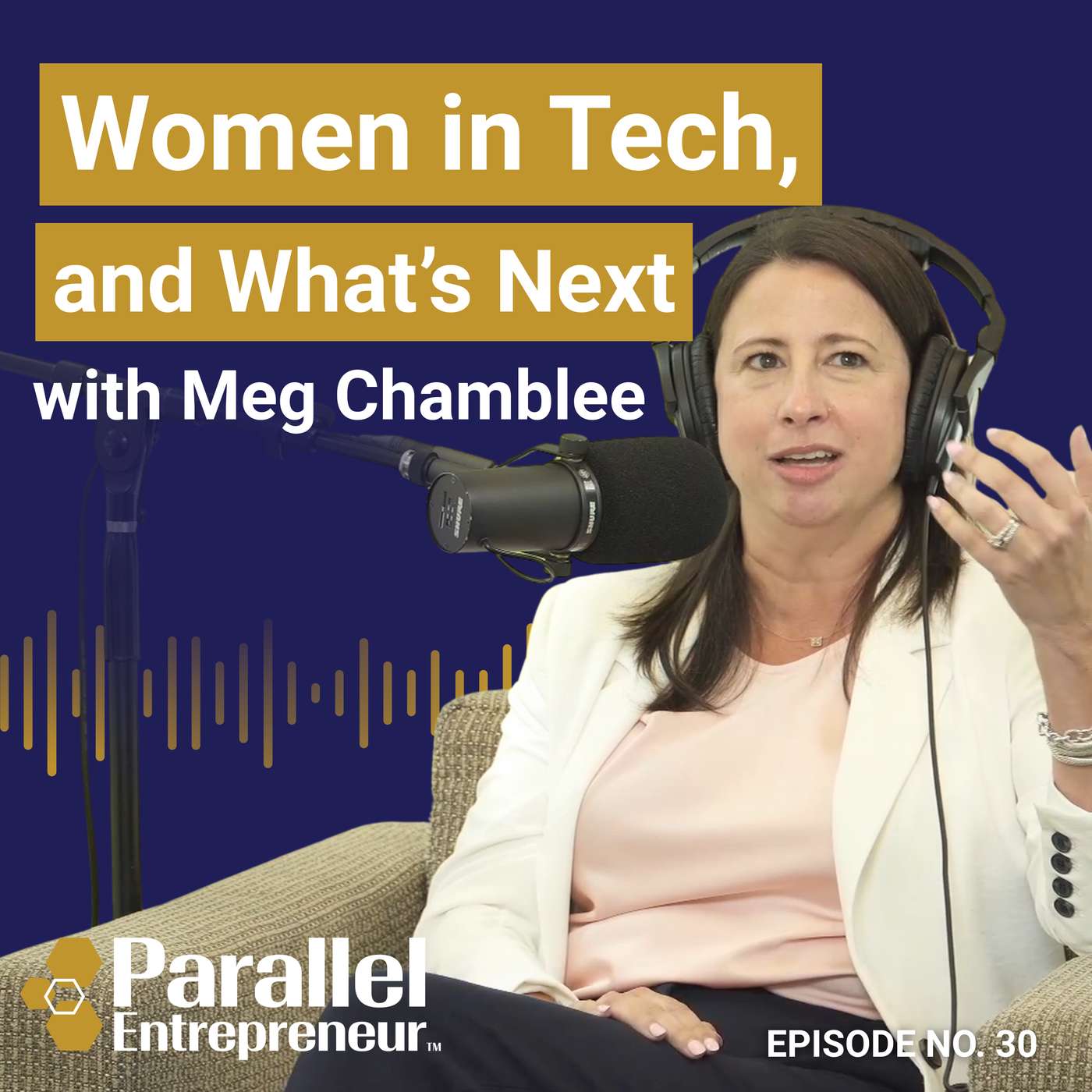
Women in Tech, Real Relationships & Nashville’s Growth Story | Meg Chamblee

Parallel Entrepreneur with Mark Cleveland · Episode 30

0:00 / 21:59
Women in Tech, Real Relationships & Nashville’s Growth Story | Meg Chamblee
0:00 / 21:59

Episode notes

In this episode of The Parallel Entrepreneur – Innovation Series, Mark Cleveland and Johnny Anderson sit down with Meg Chamblee, Executive Vice President for Tennessee at UDig.

Meg launched UDig’s Nashville office in 2020 and has grown it more than 10x, building not just a market presence, but a reputation rooted in trust, partnership, and long-term relationships.

But this conversation goes far beyond growth metrics.

Meg shares how Nashville’s tech community has evolved, why organizations like Women in Technology of Tennessee (WiTT) matter more than ever, and what it really looks like to lead with both excellence and inclusion.

As a past president of WiTT and a board leader at the Greater Nashville Technology Council (GNTC), Meg has helped shape the ecosystem that supports emerging leaders, especially women navigating technology careers in Middle Tennessee.

This episode explores:
• Why community is a strategic advantage in Nashville
• How WiTT is creating access, confidence, and opportunity for women in tech
• The power of real relationships in building sustainable growth
• What enterprise clients actually need from digital transformation partners
• How leadership evolves as companies scale
• Why investing in people outlasts investing in hype

If you care about technology, leadership, and building something that lasts in this city, this conversation is for you.

Learn more about WiTT: wittn.org

Connect with Meg: Follow Megchamblee on LinkedIn

About Meg Chamblee
Meg Chamblee is Executive Vice President for Tennessee at UDig, a technology consulting firm that designs and builds custom digital workflows and experience solutions for enterprise clients. She founded and leads UDig’s Nashville office, which has grown more than 10x since 2020.

Meg is a past president of Women in Technology of Tennessee (WiTT), serves on the board of the Greater Nashville Technology Council (GNTC), and co-founded the ELITE (Emerging Leaders in Technology) program. She has been recognized as an NBJ 40 Under 40 honoree and is a longtime advocate for building inclusive leadership pipelines across Middle Tennessee.

About the Hosts

Mark A. Cleveland
Managing Director at Kensington Park Capital, entrepreneur, M&A advisor, and host of the Parallel Entrepreneur Network
Follow Mark on LinkedIn

Johnny Anderson
Nashville tech leader, GNTC board member, Entrepreneur-in-Residence at the Entrepreneurship & Innovation Center, and host of The Impodsters™
Follow Johnnyonbrand on LinkedIn

Links & Resources

👉 Learn more about the Entrepreneurship & Innovation Center (EIC):
wcs.edu

👉 Join the Parallel Entrepreneur Network:
parallelentrepreneur.com

👉 Subscribe for more conversations with leaders building aligned systems across business, education, and community.

👍 If this episode resonated, leave a comment or share it with someone shaping the future of leadership.
Chapters
 
00:00:00 The reality of being the only woman in the room
 00:00:52 Episode introduction + framing Meg’s leadership
 00:01:01 Meg Chamblee, UDig, and launching Nashville
 00:01:47 Why relationships drive real growth
 00:02:03 Nashville’s tech ecosystem and connection culture
 00:03:00 The impact of WiTT in Nashville
 00:04:02 Community as the foundation for scaling
 00:05:00 Leadership lessons from growing a market
 00:06:01 Investing in people and showing up to serve
 00:07:00 Board service, volunteer leadership, and long-term impact
 00:07:42 Episode close

Chapters

  1. The reality of being the only woman in the room
  2. Episode introduction + framing Meg’s leadership
  3. Meg Chamblee, UDig, and launching Nashville
  4. Why relationships drive real growth
  5. Nashville’s tech ecosystem and connection culture
  6. The impact of WiTT in Nashville
  7. Community as the foundation for scaling
  8. Leadership lessons from growing a market
  9. Investing in people and showing up to serve
  10. Board service, volunteer leadership, and long-term impact

Full transcript

We have had a lot of women come in and say like literally I'm the only woman in this is myself too like I am the only woman in the room a lot of the time. Even though it might be a virtual room, I mean a lot of the time. And it is very refreshing sometimes to just go into a room of women and just it is a different feeling

Our guest today is someone who understands that growth isn't just about strategy it's about people, timing and trust. Meg Chamblee is an executive vice president at UDig. Where she established and leads the firm's Nashville office. Meg drives strategy and growth across a diverse portfolio of enterprise clients, her work sits at the intersection of strategy, software, data, AI and automation, helping turn big ideas into real measurable impact.

What makes Meg's perspective unique is the path she took to get here. She started in human resources, built recruiting teams from scratch, moved into business development and ultimately into leading this technology consulting organization. In our conversation, we talk about two things that don't get enough airtime: 1 how building a market is really about relationships before results; and 2 how leaders who understand both people and technology are the ones creating durable growth right now. Let's jump into this conversation with Meg.

Where's one of the biggest impacts your community and your network and that effort you put in, what's one of the biggest returns that you've seen in a in a tangible way? In a tangible way? I mean, yeah, my first thought is more about like professional experience and growth and stuff, but like there are certainly like networking tangibles.

Like I met this person through this way and that lead to actual business that we're doing, that's happened quite a bit, honestly. It's almost hard to track it happens so. When it's so interconnected, like I think about our work with Tractor Supply is pretty public so that's probably a good one to think about. I first met Glen Allison at an NTC event like when I first moved to Nashville, and then I met Marla Lamont who was a tractor recruiter at the time through a WiTT event in Nashville.

And then I'm I don't even remember I met a bunch of other people in other ways from the NTC to WITT to Leadership Brentwood later I did Leadership Brentwood through the Williamson, Inc. group and met even more people. So this is like eight or nine years of meeting people and exploring things but never actually working together and then at a Leadership Brentwood event I ran into Glenn and we were like hey we should do this together, and then like three months later we were working together.

And for us as UDig and we're you know I I joined UDig to start the Nashville office about six years ago, and we're starting to you know build out our client base and our team and everything that was just a huge it made a huge impact on our office on our company, and now that was three or four years ago and we're doing more and more with them.

And it's been incredibly impactful, but I definitely originated in community. There are some things you give to that don't give back, and there are some things that you give to that have a return. We're talking about what is the return? But I haven't I've been here for 25 years I haven't seen anything that I gave to in Nashville that didn't give back in some way.

I was gonna say yeah I feel like everything has a return, it's just sometimes it's tangible There's these organizations that are all kind of sort of purposed to make sure that this is fertile ground. And I'm I just wanna ask more I mean have you ever been in a situation where you didn't experience this return, this growth sense the sunshine on on the thing that you planted?

Hmm it's a good question. First of all I it's not like everything I go to I think ooh, you know what am I gonna get out of it? I which I feel like is a really important part of it's a huge the mindset and I think that's where people get frustrated, as they have the wrong expectations. You know I think if your motivation is just I don't know, I just feel like I wanna be a part of whatever this is and you know at the end of the day what I'm what I'm looking for is not something like I want to sign a deal after this thing. Right.

I just wanna learn, I wanna get more involved, I wanna see how I can help. but it was more like that seems to me to be the spirit of what you brought to everything and so it continues to circle back. Well I think the this is sort of my WiTT example. So, when I first moved moved here, and I was everywhere. I mean Bryan Huddleston used to make fun of me, like there's Meg again, like she has nothing else to do.

she's just done all the events. But through that I met a lot of people, I got involved in things and I wasn't like a career salesperson, I was in HR, I did some recruiting, like I wasn't, you know. And so where I felt like I could be helpful was in helping people with campus recruiting, or like you know I was trying to think of things that I could do to be helpful. But in the end it was just like literally anything and when you get into an organization like WiTT like I'll help with registration or I don't know what do you need like I'm around I can do things.

And eventually Beth Hoeg somebody referred her referred me to her as they were looking for board members for WiTT. And she was like hey you know would you be interested in this? And that was the first board I had ever been asked to be on I like couldn't believe it, I was like oh my gosh the board, I can't believe they would ask me.

Little did I know, like it's a job. You cannot refuse. It's I want you to work for free like how do you feel about that? But it was great and that was a game changer for me, and then eventually I became president of WiTT, which gave me so much experience. I got to manage a PNL, I got to you know you're really leading a team it's an all volunteer board, we don't have a staff, there's so much work to do.

I did that during the pandemic. I mean there was just a lot that I learned through that experience that's to me way more valuable than any like client or like relationship. Cause it just taught me a lot about myself and who I am as a leader who I wanna be. I it's just been what's. What's the conversation? you wanna be driving in Nashville I'm trying to think about that.

I know what the answer is. What is it? She's already doing it and it is it's it's helping grow leaders, helping grow followers, helping grow you. I've watched you help grow people. and I want your input on this I think it we've talked a little bit about you know what why we go to the networking events and what we do, and the people that don't get our eyes on it and I think it's about intent.

And I think if I heard you right it was mostly about go in with no expectation of a return that's the only way to get a return? Yeah. Is to go in with an expectation of no return. And I've watched you play that out, where Meg's just Meg and she's there to help and it's. You get grabbed at a lot it's like an open bag of candy sometimes and you know everybody wants everyone knows Meg can help so everyone's gonna ask for Meg's help.

We've had that conversation. So tell me about a time you had to say no. Well you remember this time maybe? So if you don't know John and I along with Joanne Ecktonn and Suzi Earhart, put together this elite program for the NTC the Emerging Leaders in Technology Program. And and now it's like 10 years. Is it? We are at our 10th year. Yeah.

So very rewarding, great experience with again the goal of like you know there's a there's a layer of leadership that's not getting addressed or connected. Like we have CEO groups we have user groups for practitioners but like new leaders, middle managers those people need some love too. And so we kind of put this thing together.

And so a few years in, I think I was pregnant with my second child, when we were putting Elite together the first time. And I was on the board of WiTT at that time, there was a lot I was already doing. And I didn't leave any of those things I took maternity leave you know and then I I went back to all of it, WiTT, everything.

And after maybe a year or two of that I was just like oh my gosh like I cannot, this is too much I can't do it. You know, now like I have clients, I have like I have more to do, I have like two kids, I have this is pre covid so it's all in person you know and I'm like the screeching in mom at the daycare like 5:59 before I'm gonna get charged like $30.

And I called we were on a call, and I was like OK I have to bow out of Elite, it's too much time like I I cannot, I can't commit to this. And I think it was maybe all of you? But I remember Joanne saying, "you know, you don't have to do as much as you're doing," like you can still be involved and not be you know and just be around. Like you don't have to do so much of.

You know maybe your expectations are too high. Like you don't have to be at every single Elite thing every single time. It was just this permission to still be involved but not like work so hard at it almost or spend so much time on it. Which was just very freeing and I'm so glad I stuck with it, because you know it it continues to be this I don't know a gift that keeps on giving in a lot of ways.

Actually, all I heard was we just wouldn't let her say no. That's that whole story though, that's we wouldn't wouldn't take no for an answer. But you let me like back up. I mean you let me you know you let me hold myself to like not as high of an expectation on what I felt like I needed to do to like be helpful. When I think I learned this through some of that process as well is you bring an oversized value in certain ways.

There's things we're all good at, things I'm good at, things you're good at and I think it was permission to focus on where you're where you brought the most value. Focus there don't worry about the rest of it, and I feel like that was that freeing part and I've had that same conversation for me as well. Is we've got all this other stuff but where you bring value focus on that and that alone. Yeah, I think I need to do it I think I need to figure that out again, as we've talked about.

Because the alumni piece is where I was focused and then that has not we need to do more with the Elite alumni group than we're doing. And again I feel like there's probably there's probably an actual alumni or someone else who could step up to do that but it's been hard to recruit somebody to put the time yeah that you really need into that part of the group, so this is my advertisement if you're if you're listening Elite alumni call me. It's time for us to hand the torch over.

We are tired. No, I think you guys have invested. You're looking for someone to come along in that diamond field that is Nashville and help you harvest some of the raw rocks. You know I mean this is a what we're talking about today about Nashville is how is it evolving? What are the facets of Nashville's technology and innovation culture that you see and I wanted to go back to something you said earlier.

You left, you know you're native you you left, you came back you reestablished. There was a different place to live I mean Nashville had places that you didn't want to live, and now there are almost very few to know places that you don't want to live, I mean I live in East Nashville that that would like what are you talking about.

At some point in the past the city has just continued to evolve and the closer you are to the city the more dynamic it is and and so you reestablished yourself, and you created a new energy center that you could give and and it would support you. So how did what what did you see in that experience that was different? You know what about Nashville has changed in your mind, most recently and in over that window of time where you got re established?

So I moved back in 20 like early 2014, so Nashville was already different. But since then obviously has become very different. So I mean you know Nashville itself different, but I think also I was different, right. Like I you know, ten years later I'm a different person, like I'm married I have children, and so I think it was also like okay which part of Nashville is gonna be the right thing for me now that maybe isn't what I would have expected when I was graduating high school.

And like making assumptions that if I was here I would just have whatever this life is that I had before. For an example so I went to Harpeth Hall I went to all private schools when I was here, I left, you know my husband went to public school we were that was kind of our track in in Birmingham where we were living we moved back and it was like okay well I guess we should live over here, like this is what my friends are doing, you know like let's figure this out. But then I'm working in like so that's like Green Hills, and I'm working in Franklin it was just it just wasn't really working for us the way that that we needed it to for our family,

and then you know I mean Brentwood was around when I left, but I didn't live there. And so now that's where that's where we are and we're in the public schools and it it just it works so much better for our family. So I think none of that is really new Nashville but I think it was more like how do I fit my new self into the Nashville that I kind of am the best fit for. Yeah.

Yeah. And in the areas that we didn't talk, I lived in Brentwood for forever in East Nashville for the last seven years and I look around at Gallatin and. Right. Hendersonville and these places that are, I mean you know Williamson County's got the beacon of public education and great leadership and a lot of people who are contributing in so many ways.

And then if you if you pull yourself out of that and look elsewhere, wow there's something really incredible going on in Jolton right now and in Fairview. Yeah places that I would have never even imagined they're just it's like bubbling with creativity and and I just a great it's a great place to be embraced I think, everywhere I look the communities are embracing each other.

Yeah I think that's true too, and in the economic development of the whole region is just a huge factor. I mean it you know I think there's a lot of you know people might complain about growth. But without I mean we all grow with the growth. You know like because of that influx of companies that brings talent that creates opportunity for people like us.

You know it and now my kids have exposure to new kids who are from California or from wherever and that is that makes them better. Like it the whole thing is more diverse, you know the whole community becomes more diverse, with all these different experiences instead of some other communities that might be well if you're not from here you don't understand, and so like it's.

I've just I've been in some other communities that are just you know they're less there are fewer people from outside of those communities to bring in new ideas to which creates innovation you know and they end up getting a little bit more stuck. And so I think, that's probably to me maybe the the most beneficial thing of Nashville's growth is just how innovative we can be, and how how much more opportunity it creates for everybody here.

What piece of wisdom do you wanna leave us with today? Oh I don't know if it's wisdom but I would say I think just the Nashville way is to pay it forward. I know when I got here people would say that to me, like they would take a coffee meeting because somebody took a coffee meeting with them, you know and I think and I think that's been going on for decades in Nashville. So I think that is one thing that hopefully is still kind of permeating even though people are coming in from other places that they're feeling that when they get here, that it's not like other every other city, you know it's a very giving town to your earlier statement and I would just say

to pay that forward and keep that going, so that we keep Nashville the special place that it is. In all of these relationships that that we are asking you to share you know what is your wisdom? What is your observation? Tell us a story about one of the members of WiTT who you could confidently say, they changed their life in some way.

What would an example of be that of that story be? So this was the sister of a coworker of mine and he had reached out and said hey my sister is a music teacher and she wants to get into technology. And you know I think you're in this WiTT group you know would you mind talking to her, and I talked to her. And she might have already known about WiTT I honestly don't remember that completely but she she applied for a scholarship, she got the scholarship, she went back to school.

I think it was an SS that she did um to get you know her training. And then from that got an internship at HCA and then started working at HCA in IT. And that you know that probably took two years, or 18 months or so. But you know that is life changing, I mean she completely changed her career. She then told her other teacher friend I feel like maybe she was also a music teacher and she did the same thing.

And then it becomes this kind of ripple effect where you're actually getting more people who might not have ever considered that career path before and now they're in it and it's happening. And they you know surely she would have done it anyway if she hadn't gotten the funding but you know no doubt that funding helped make that decision for her and and accelerate that pathway.

So she's she's a good one, but there are so many. I mean a lot of people who whether that made the whether WiTT's funding or a topic that you listen to or something that just made you think I'm gonna keep going. I you know I was thinking about getting out of this. We have had a lot of women come in and say like literally I'm the only woman in this is myself too like I am the only woman in the room a lot of the time.

Even though it might be a virtual room, I mean a lot of the time. And it is very refreshing sometimes to just go into a room of women and just it is a different feeling you know. And I'm sure men you know feel the same way in different areas like it's it is it's just it can be more comfortable. So I have I have heard a lot of women say that, like you know okay at least I know I'm not alone even though I am alone at my job, or or wherever like I have this support group and and other women who can who can support me.

And countless times of job referrals and relationships networking leading to opportunities for sure Just maybe it's a bad question that I asked,

It's just her nature. And I think it points out,

Building more than one venture?

The Parallel Entrepreneur Network is a private, vetted community of founders running multiple companies at once. New to the idea? Start with what a parallel entrepreneur is.

Apply to the Network

← All podcast episodes